Cape Verde
Ten islands in the Atlantic — green mountains, wild coastlines, morna music and a “no stress” way of life. Our two-month journey across Santo Antão, São Vicente and Sal.
1Overall Impression
Cape Verde is an island nation in the Atlantic Ocean, about 600 kilometres west of the African coast. The country consists of ten main islands, each with its own distinct character. African roots blend with European and Caribbean influences in both history and everyday life.
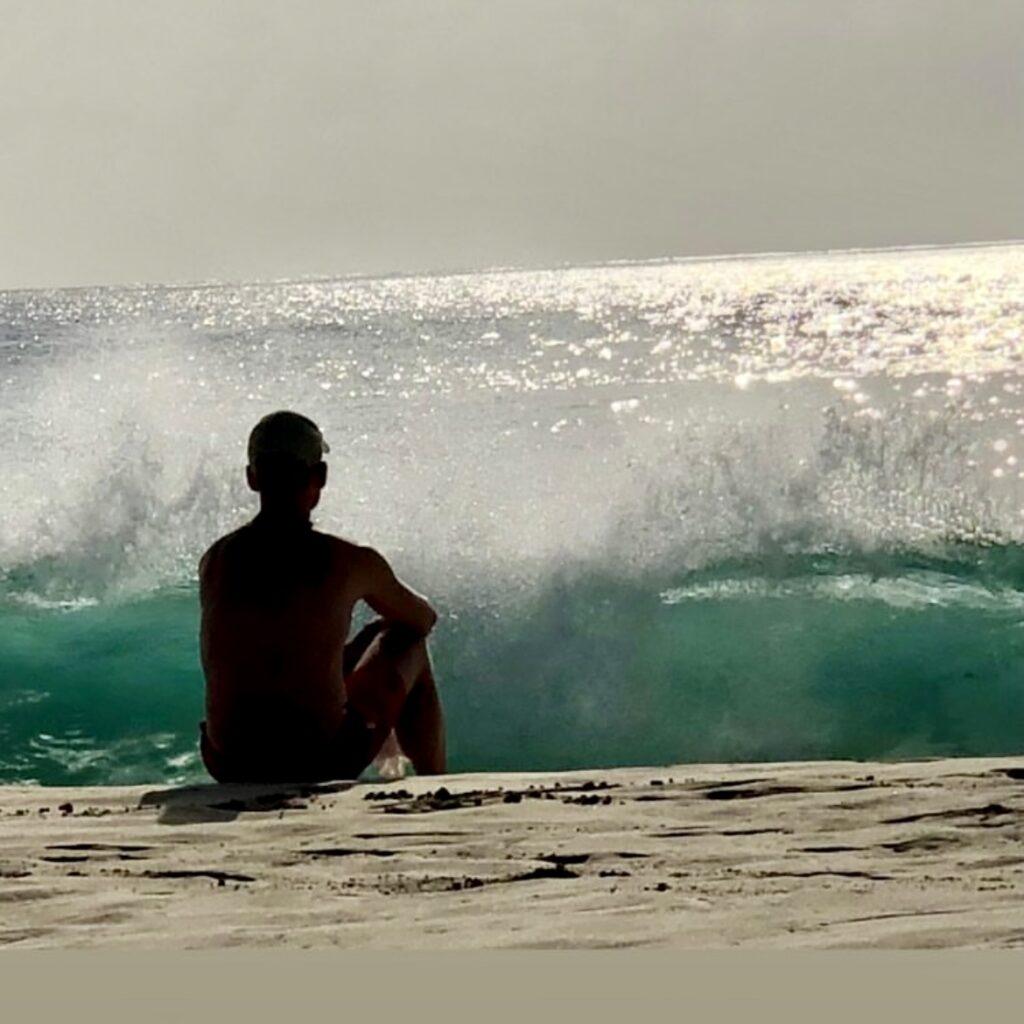
The landscapes vary widely: green mountains and deep valleys, bare rock formations, dry desert areas and long sandy beaches — where strong waves should always be treated with respect. What all the islands share is the climate: sunshine and warm temperatures throughout the year.
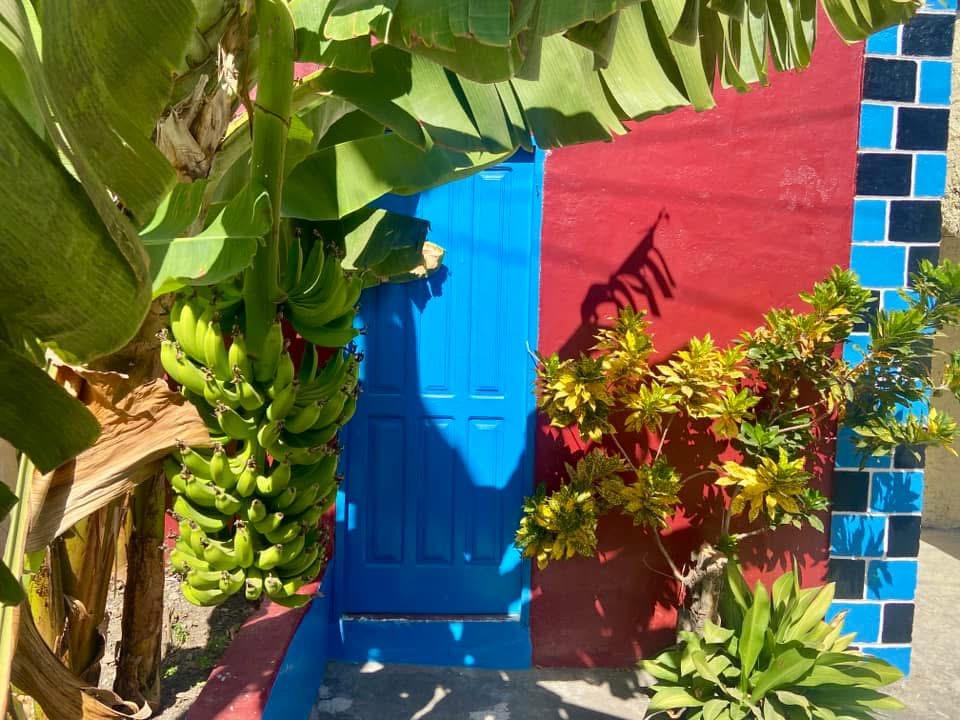
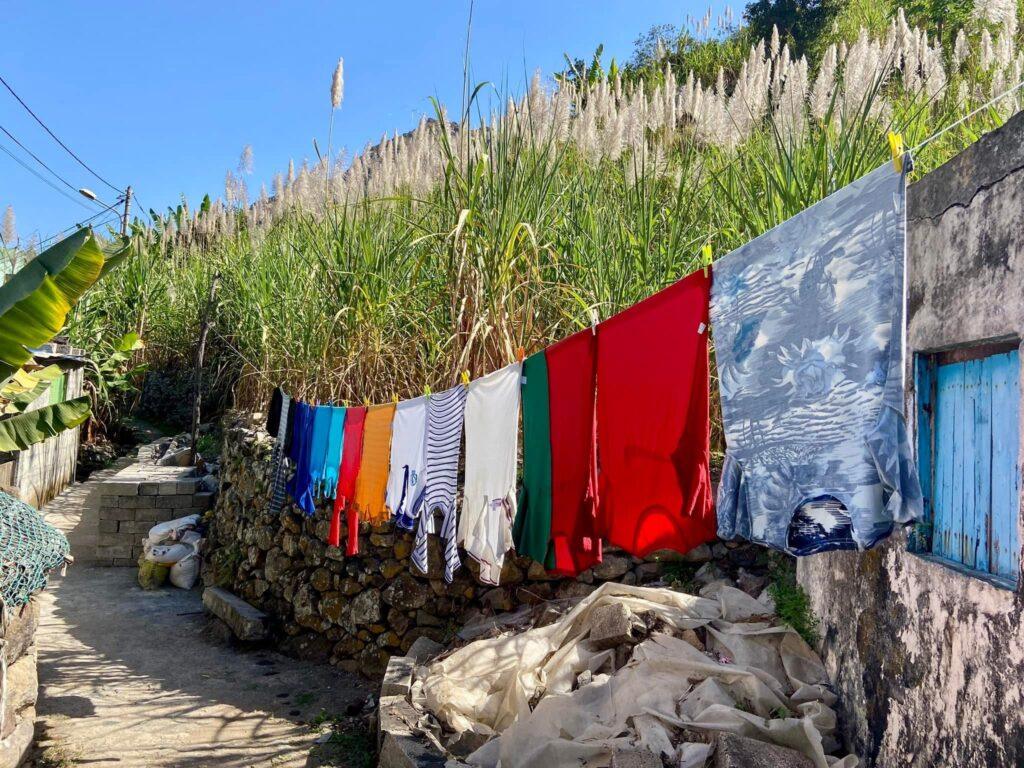
Music is a natural part of everyday life. Morna, made internationally known by Cesária Évora, is heard everywhere, alongside rhythms played on homemade instruments. The annual carnival is the country’s main cultural event and an important social gathering.
Living standards are modest, but daily life is shaped more by simplicity than by real hardship. Life is lived at an unhurried pace, with strong hospitality and an easy acceptance of how things unfold. Time is flexible, and “no stress” is more than just a phrase — it is a lifestyle. The approach to rules and systems is relaxed, and, surprisingly, it works well.
Cape Verde is considered one of Africa’s most stable and democratic countries, possibly helped by the fact that the islands lack valuable natural resources that attract outside interests.
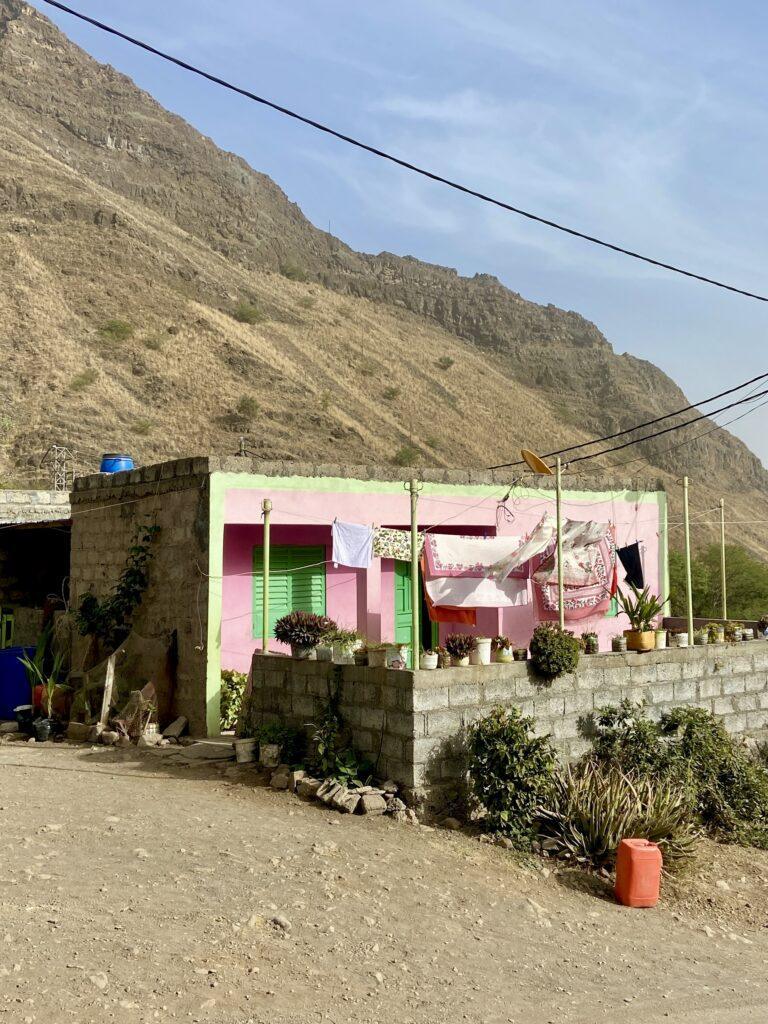
Local food is simple and filling, based on fish, maize and beans. The national dish, cachupa, is slow-cooked and reflects the country’s rhythm and character.
We visited three islands: two months on Santo Antão, the greenest and most mountainous, with shorter stays on the cultural island of São Vicente and the more tourist-oriented island of Sal.
Facts about Cape Verde
- Cape Verde was uninhabited when Portuguese explorers arrived in the mid-15th century. The islands quickly became an important trading hub between Europe, Africa and the Americas, especially during the transatlantic slave trade.
- The country remained a Portuguese colony until 1975, when it gained independence. Since then, it has become one of Africa’s most stable and democratic countries.
- Population is approximately 530,000, with around 170,000 living in the capital, Praia.
- Main religion is Catholicism, with smaller Protestant and other communities. Faith plays a role in daily life but is practised informally.
- Official language is Portuguese; in daily life most people speak Cape Verdean Creole.
- Currency is the Cape Verdean escudo (CVE), pegged to the euro. ATMs are available in larger towns and at airports.
- Tourists usually do not need a visa, but must register arrival and pay an entry fee via ease.gov.cv.
Getting around on land
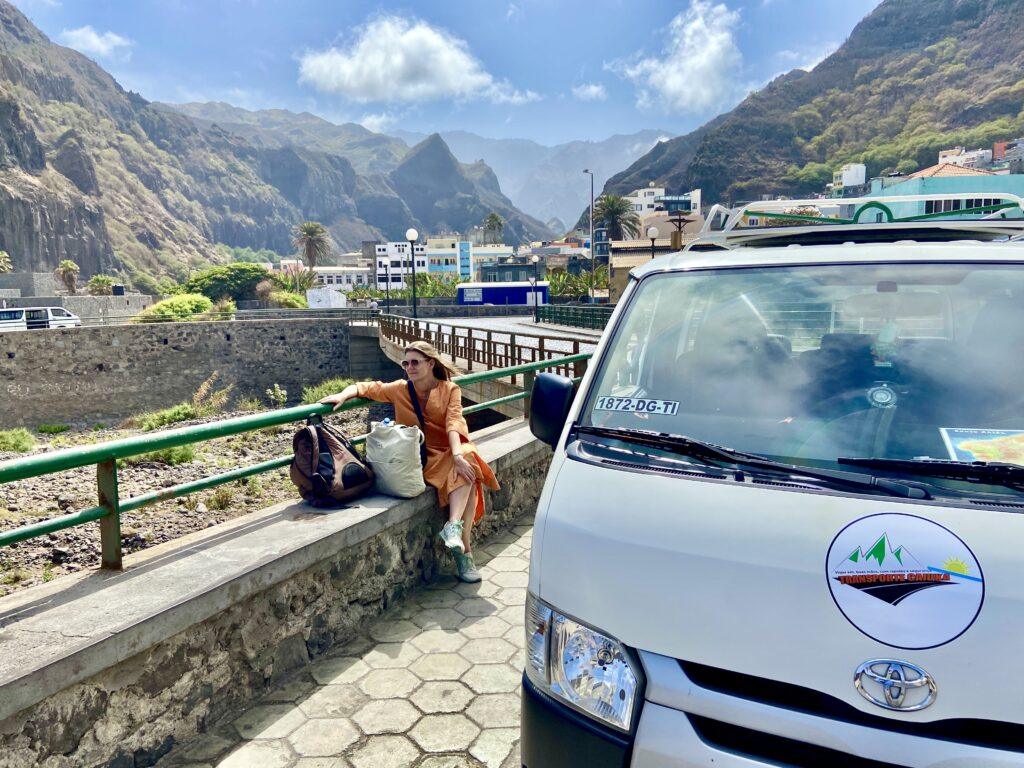
Transport in Cape Verde is simple, practical and suited to the size of the islands. The most common form of transport is the aluguer — a minibus or pickup truck that operates as both public and private transport.
Public aluguers run fixed routes between towns and villages — look for the destination signs in the windscreen. They usually depart when the vehicle is full and do not follow strict timetables. Inexpensive, but can be slow and crowded. In return, they offer a genuine local experience. Carry small change.
Private aluguers can be hired for individual trips. You pay for the whole vehicle and choose your own route and departure time. A flexible option for hiking trips, airport transfers or destinations with limited public transport. They often wait at transport hubs and approach travellers directly — this is normal practice.
Taxis are mainly found in larger towns such as Praia, Mindelo and Santa Maria. They are relatively inexpensive, but rarely use meters, so agree the price in advance.
2Gastronomy
Cape Verde’s cuisine is simple, filling and closely connected to the islands’ natural conditions and everyday life. Fish and seafood play a central role, supported by maize, beans, root vegetables and produce from local fields.
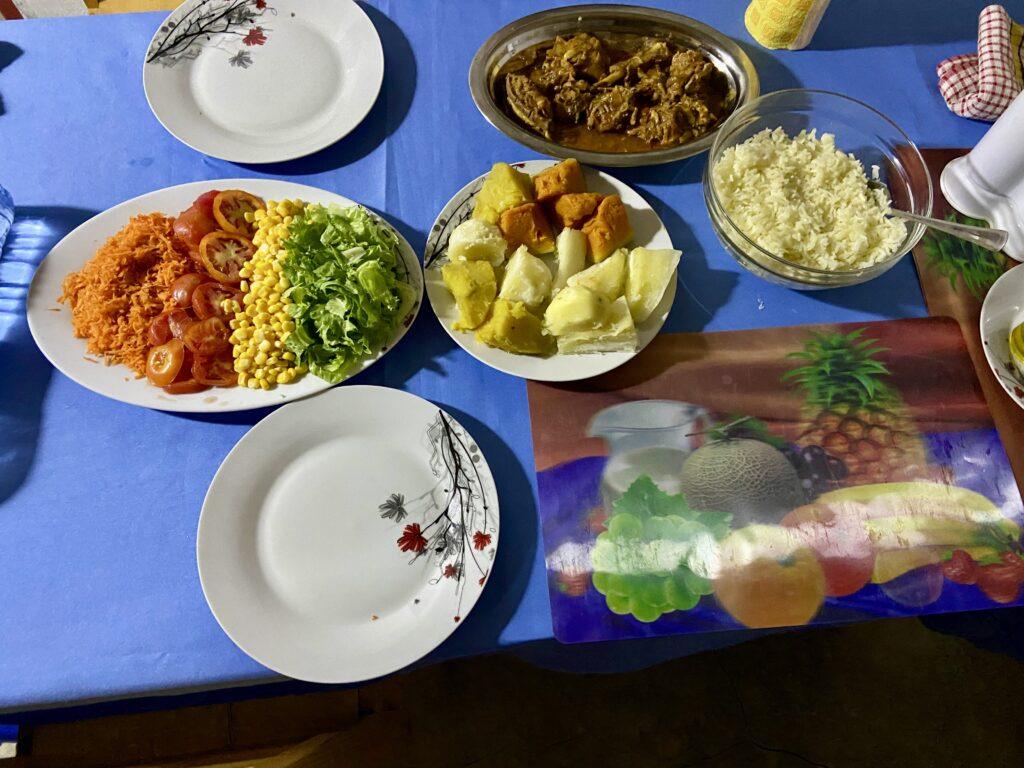
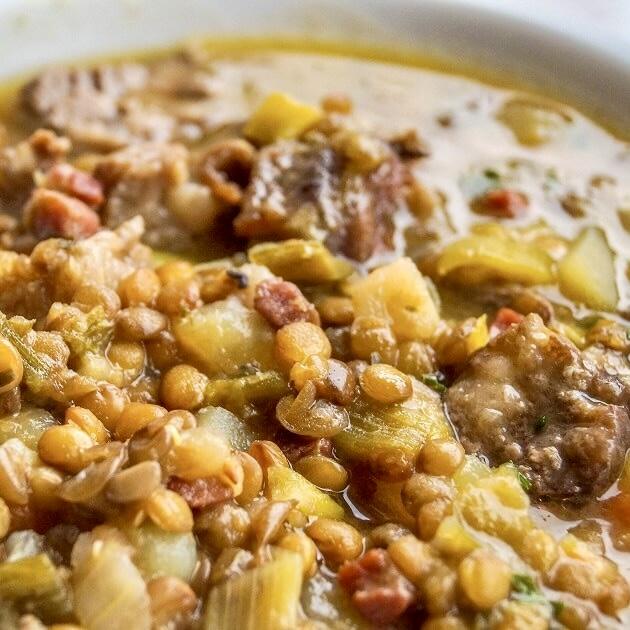
The national dish, cachupa, is a good example. It consists of maize, five types of beans, vegetables, fish and/or meat, slow-cooked for several hours. There are many variations, and it is eaten both as an everyday meal and on special occasions. Leftovers are often drained and used the next day as cachupa refogada, fried with egg or sausage and commonly served for breakfast.
Grilled fish, tuna, lobster and octopus are typical along the coast, while meat dishes such as goat and pork are more common in the mountain areas. The food is rarely heavily spiced, but it is flavourful and satisfying. Meals are social and informal, reflecting the country’s pace of life: simple, unhurried and based on what is available.
3Santo Antão
Santo Antão is the most mountainous and by far the greenest island in Cape Verde. The landscape is shaped by steep slopes, deep valleys and narrow paths connecting small villages scattered among terraced fields of sugar cane, bananas, papaya, avocado, herbs and coffee. Fishing and farming remain central to life for the island’s approximately 45,000 inhabitants.
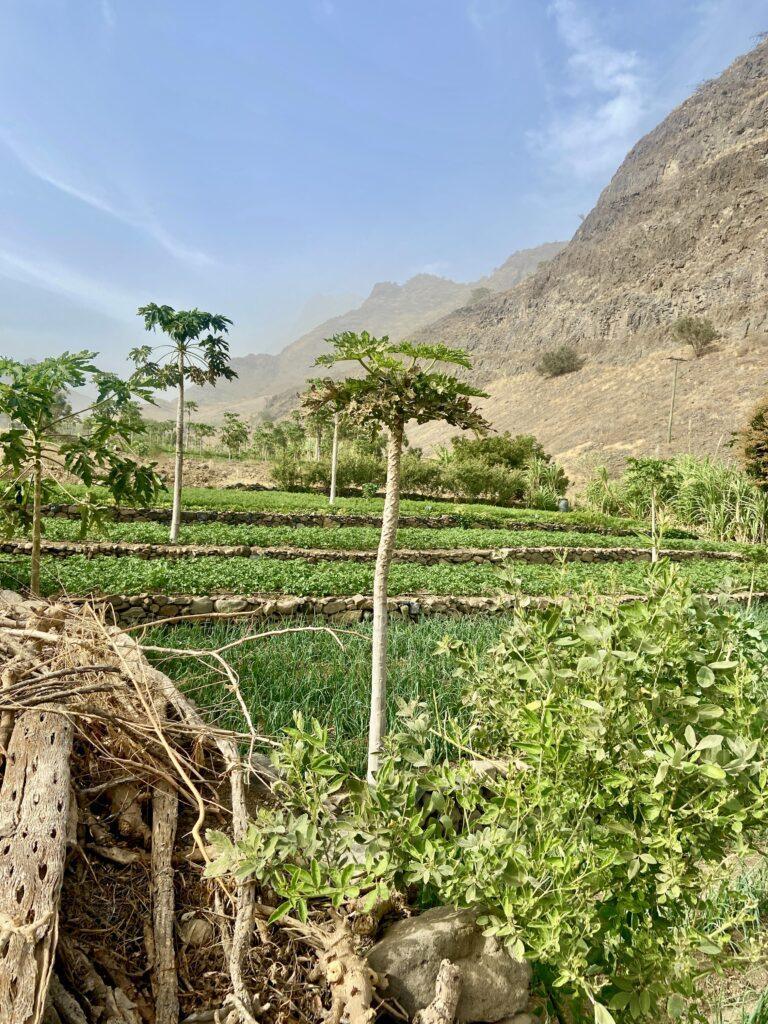
It should be said clearly: if hiking is not for you, there is little reason to come here. This is not a beach island with resorts and sun loungers. Santo Antão is known for its hiking routes — some of the finest on the islands and in the world. With relatively few visitors, we often had the trails almost to ourselves. At times, hours — and occasionally days — passed without meeting other hikers, especially in the western part, which is drier than the east but no less interesting.
The terrain changes constantly, from dry coastal areas to green mountain regions with mist and cooler air. The routes include steep stairways and narrow paths, and it is not always obvious how the trail continues around the next corner or higher up — but it does. Santo Antão is a place to move slowly, look far ahead and feel the island under your feet.
3a. Paul Valley
Paul is the name of a region in the eastern part of the island, although this can be confusing, as many people also refer to the town of Pombas simply as Paul. You quickly get used to it — at least the town does lie in the Paul region, by the sea — while our village, Chã de João Vaz, is located six kilometres inland, up in the mountains to the south-west.
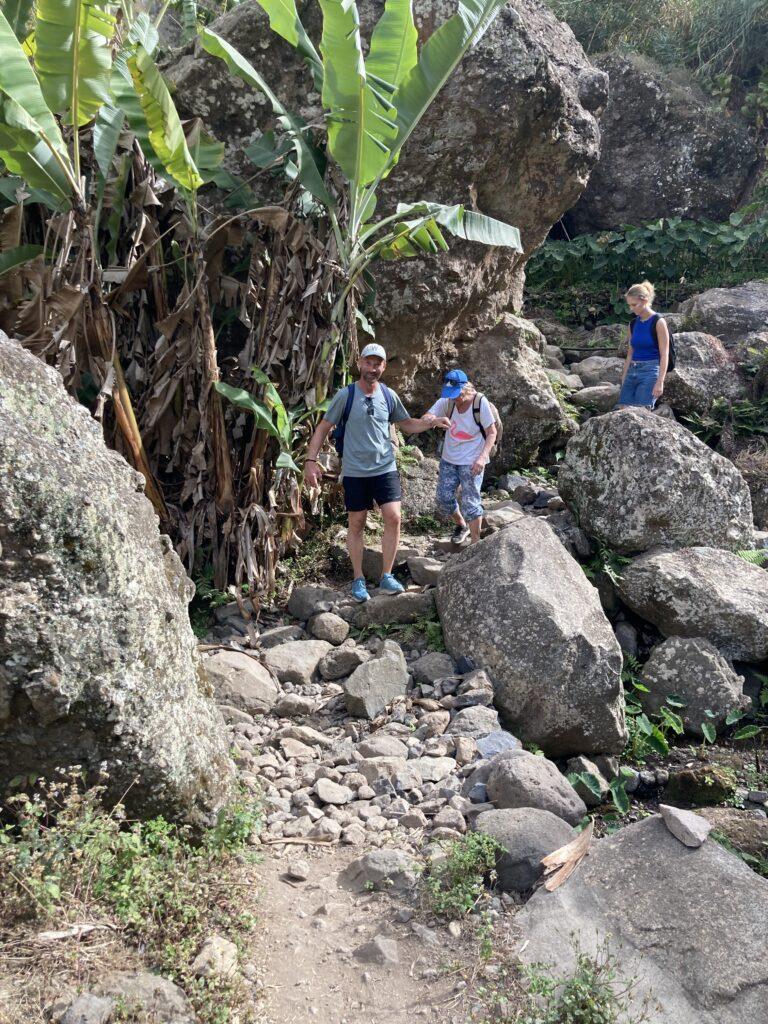
The journey there follows steep, cobbled roads with views over green plateaus, palm trees and clusters of well-kept houses — a remarkably scenic route through the landscape. Jacob’s mother visited us for a week; she is 77 and said it was one of the highlights of her life.
In our small village of Chã de João Vaz, with well under a hundred residents, there were no fewer than three small grocery shops — open as needed, with a selection that encourages a simple way of living. You buy what is available on the day: a single roll of toilet paper, thirty eggs, loose beans, small pots of yoghurt, and similar basics.
Just a few houses away, we found an excellent lunch restaurant with its own garden. As we became more familiar with the area, we were able to arrange regular deliveries of mixed fruit and vegetables from the garden at very low cost. Shops with a slightly wider range can be found in Pombas.
The route from Pombas through Chã de João Vaz and on towards the summit at Cova Crater is popular with international hikers, without ever feeling overcrowded.
Where we stayed
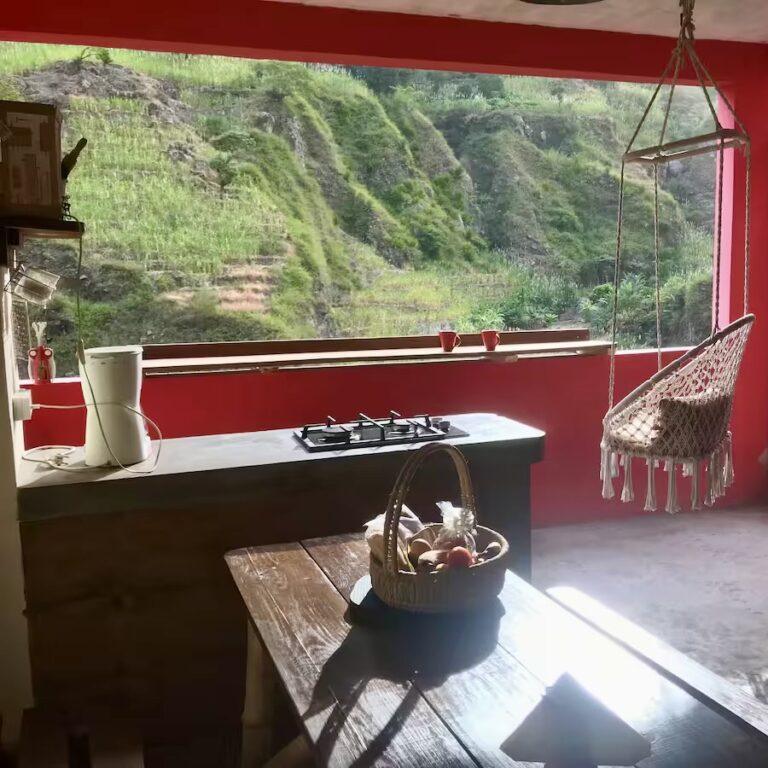
We found our place through Airbnb — a real gem called La Kasita. It is an apartment with three bedrooms in Chã de João Vaz, with an open (windowless) kitchen overlooking the valley. Simple, but very well suited to our needs, as we worked digitally on many days. The location was ideal: about six kilometres from Pombas, close to both short and long hiking routes. The road, however, is steep in both directions.
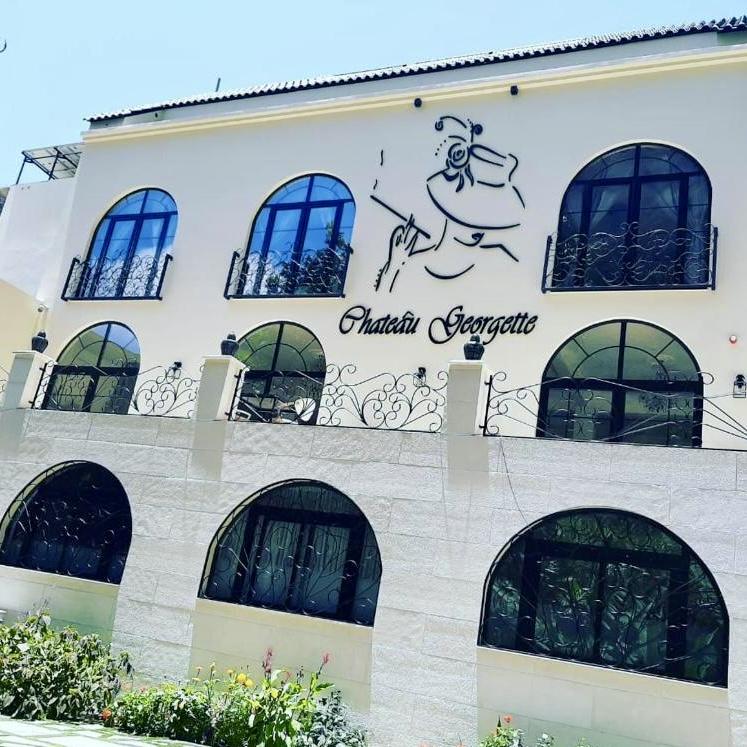
Another good option is Château Georgette, where we ate several times. It offers a more comfortable standard for the area and is also close to hiking routes — we would have chosen it for a stay of two or three nights.
For other places to stay, see Booking.com — Paul area.
Restaurants in Paul Valley
O Curral
An exceptional lunch restaurant in a thatched hut with open sides — very simple and welcoming. Both food and service are of a particularly high standard for Cape Verde. Fresh vegetables from the garden, sugar-cane juice, breaded aubergine, cachupa refogada, delicate purées, and home-baked bread.
Pé d’Dragoeiro
A married couple live in the house with their three children and run the restaurant. It serves, in its simplicity, whatever the wife feels like cooking that day. Often fresh chicken or fish — and cachupa, if you ask for it in advance.
Ady & Juju
Another small gem in the middle of nowhere. A charming courtyard and excellent food, including meatballs with fried vegetables.
Hotel Restaurant Château Georgette
A luxurious hotel and restaurant that stands out from the surroundings, while still offering reasonable prices. A peaceful, garden courtyard — good choice for both lunch and dinner.
3b. Pombas
The main town in the municipality of Paul, where the river meets the Atlantic Ocean. It serves as the local administrative centre and a transport hub for the area. With only around 1,300 residents, the town is small, but it has a handful of shops and restaurants and is the place where travellers change transport to head either up into the valley or further along the coast.
Tienne del Mar
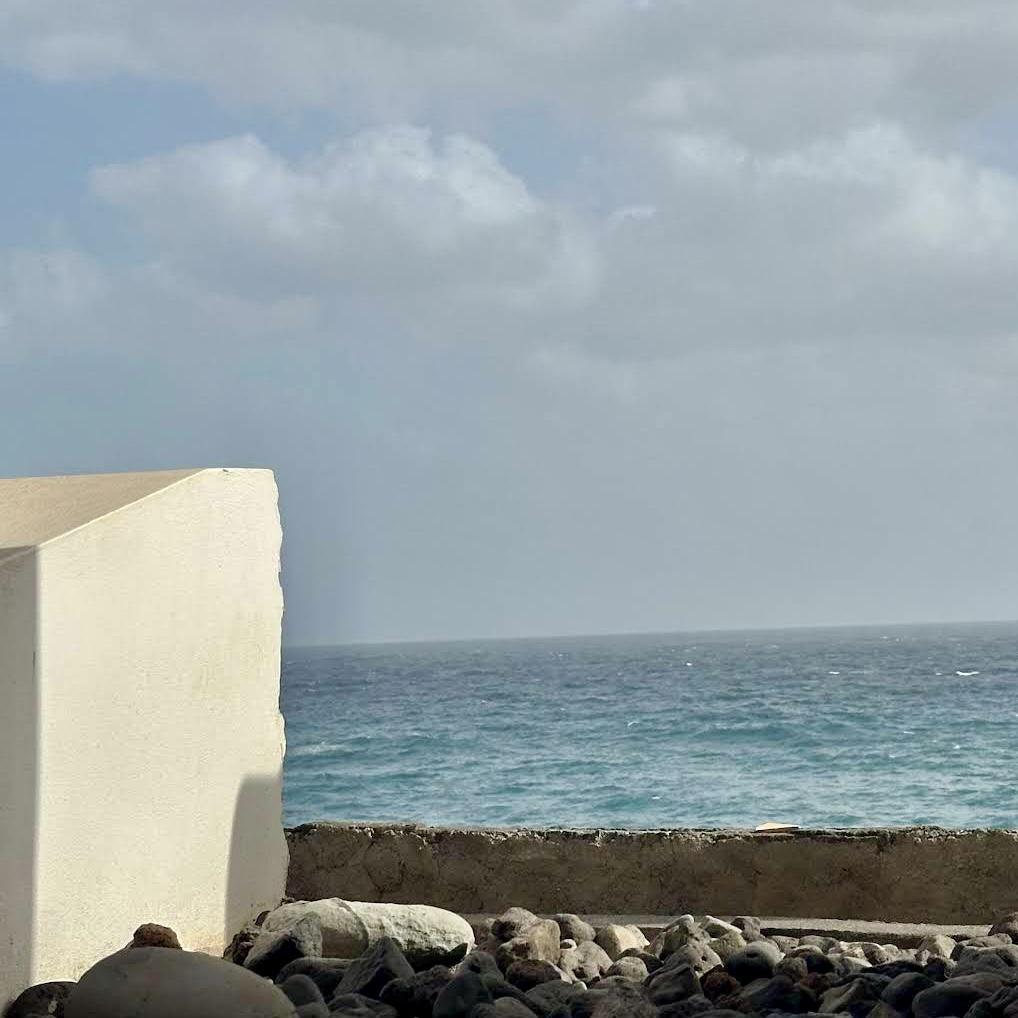
The food is decent — but the real reason to come is the terrace overlooking the sea, both for drinks and for dinner. The waves run beneath the terrace and occasionally spray up onto the tables.
Atelier
A pleasant terrace, good food and freshly made juice.
3c. Ribeira Grande
The second-largest town on the island, with around 8,000 residents, and the administrative centre of Santo Antão. Located a short drive from Pombas by the coast. This is where you find the widest — though still limited — selection of shops and small supermarkets, centred around a pleasant main square. The town also serves as the main transport base for trips into the surrounding valleys and mountain areas.
Bellcantoo
A nice terrace and good food.
Restaurant 5 de Julho
Outdoor seating on the town’s main square. Nice food.
3d. Ponta do Sol
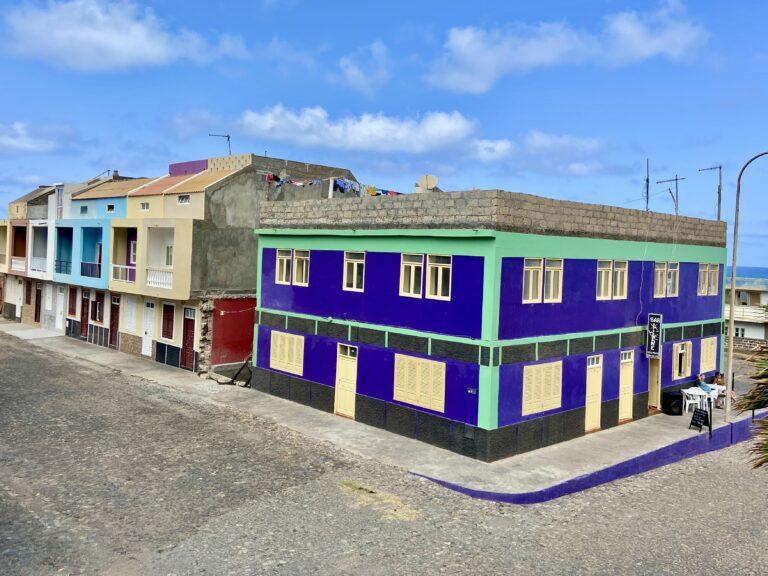
A coastal town with around 2,500 residents on the north-eastern tip of the island. Historically one of Santo Antão’s most important ports, it is now mainly focused on fishing. A quiet local community with limited tourism and a base for one of the island’s most sought-after coastal hiking routes — to Cruzinha.
It is clear that the town was more prosperous in the days when it still had an airport. Take a walk along the former airstrip, which was closed in the 1990s after an accident, and enjoy the dramatic sunset.
Accommodation
Find options in Ponta do Sol on Booking.com.
Caleta
Good food, tasty snacks and well-made drinks.
Veleiro
A terrace right by the water.
3e. Fontainhas
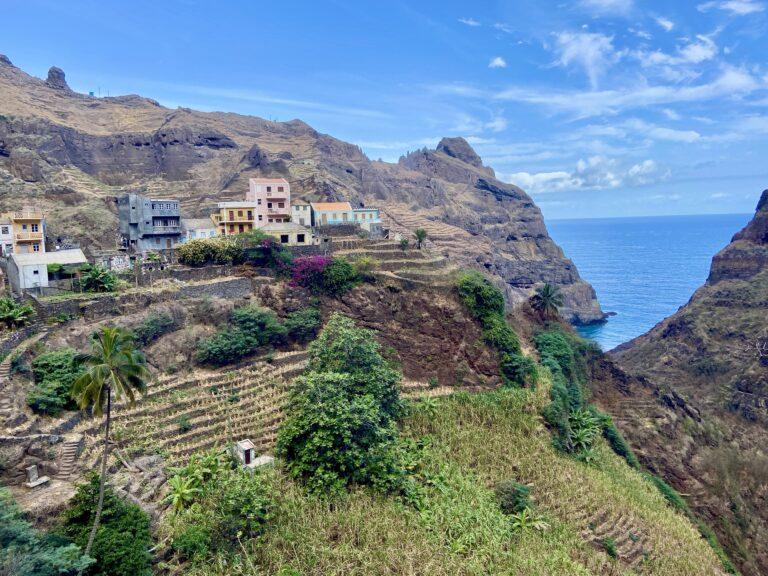
A small mountain village on the hiking route along the north coast between Ponta do Sol and Cruzinha — often described as one of the most strikingly located villages in the world.
3f. Cruzinha
A small coastal town on the north-western side of the island — not a classic tourist destination, but a practical and peaceful stop for hikers.
Bar Crustacio
Although it is called a bar, it is a restaurant attached to a private home. We ordered fish and were served the best of our entire trip.
3g. Monte Trigo
An isolated coastal village on the western side of the island, with no road access. It can only be reached on foot via mountain paths or by boat.
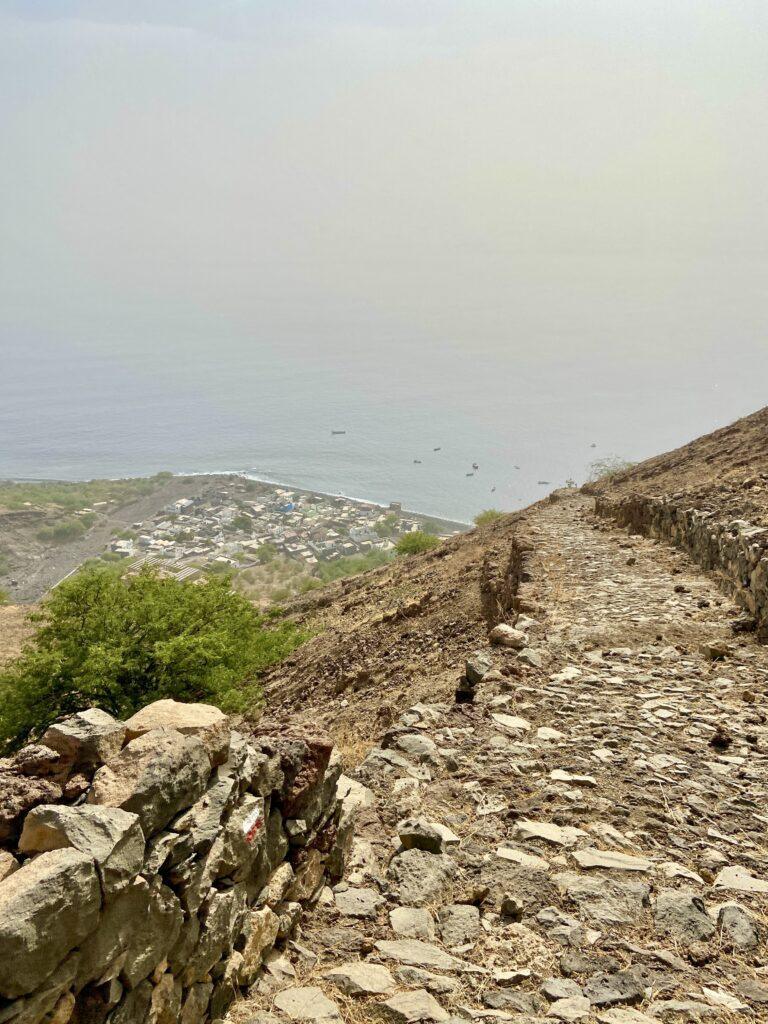
We regretted not staying overnight here after a day’s hike from Chã de Feijoal. The village is extremely charming and peaceful, with only a few hundred residents, yet it still has small shops, a church and a school. We even met a teacher in the mountains who walked to work every day from another town.
We hired a fishing boat to take us on to Tarafal, where we had booked our accommodation.
3h. Tarafal
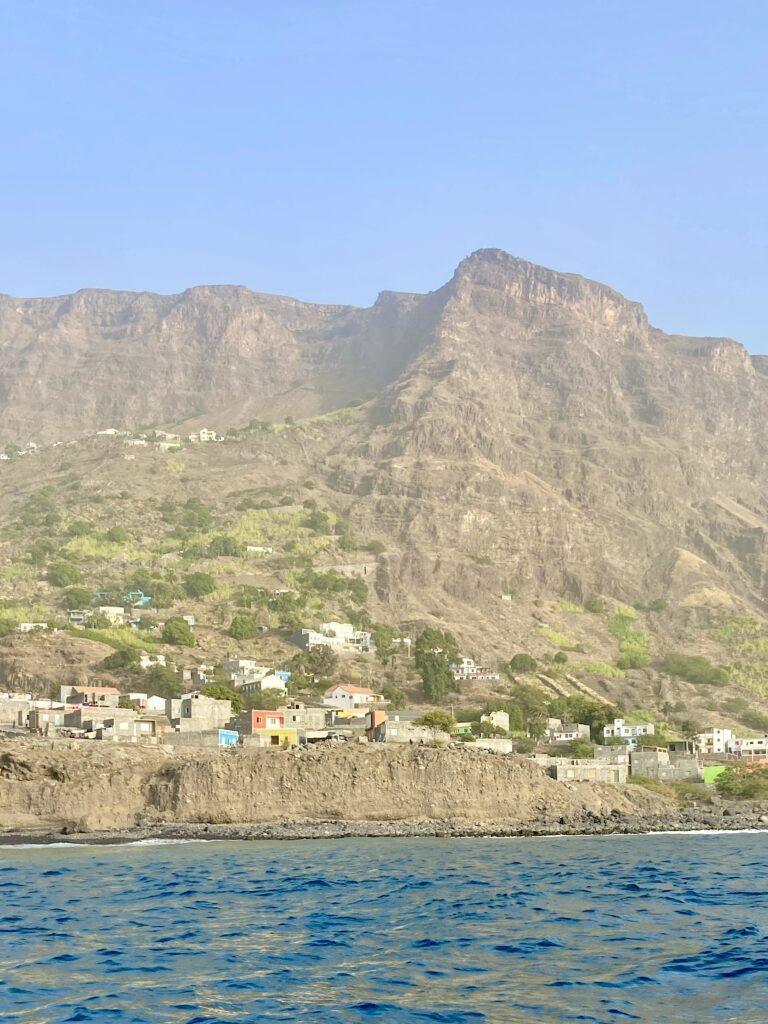
A coastal town with a few thousand residents on the north-western side of the island. It attracts a fair number of visitors, as it is one of the few places on Santo Antão with a (real) beach. The beach is pleasant, but the waves can be strong.
It is a friendly town with a good selection of restaurants, beautiful views and several accommodation options. A hiking route from here leads to Monte Trigo.
Where we stayed — Kaza Ladera
Kaza Ladera on Booking.com — a hostel-style hotel with a good breakfast and an excellent view. Rooms have private bathrooms and toilets.
BarZany
It looks like nothing more than a food trailer with a few outdoor tables, but this is where we had the best chicken of our two months in the country.
Café Casa Verde
Another restaurant you would probably walk past without noticing — but it serves excellent fish.
3i. Porto Novo
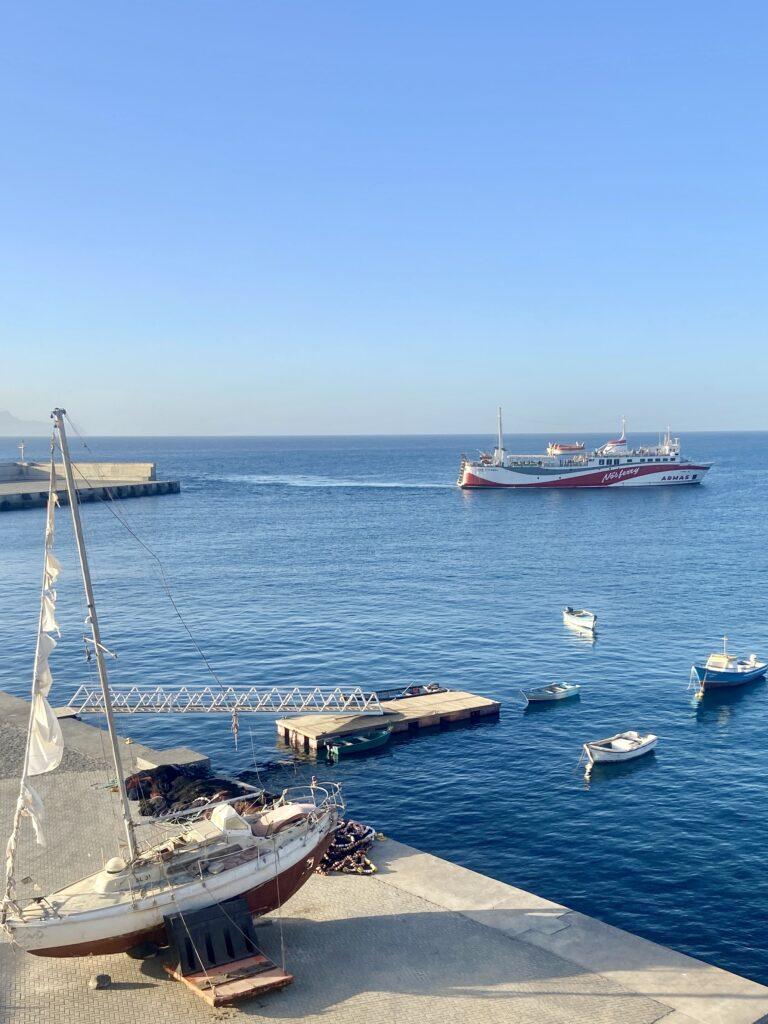
The island’s largest town on the south coast and its main gateway. This is where the ferries from São Vicente arrive, and where most of the island’s transport and supply of goods pass through.
The surroundings are dry and open, with views of both the ocean and the interior mountain areas. From here, the main road leads up through the highlands towards Ribeira Grande and the northern valleys.
Life here is busier than in the island’s smaller towns, but still manageable and relaxed. Fishing, trade and transport shape daily life for around 10,000 people, and many tourists use Porto Novo as a transit point when travelling further around the island.
Accommodation — Residencial Pôr de Sol
A decent place in the town centre. Book on Booking.com.
4São Vicente & Mindelo
The island closest to Santo Antão, with ferry connections between the two and an international airport. São Vicente’s harbour was once an important stop for international shipping, giving the island a more cosmopolitan character than many of the others, with strong European and international influences.
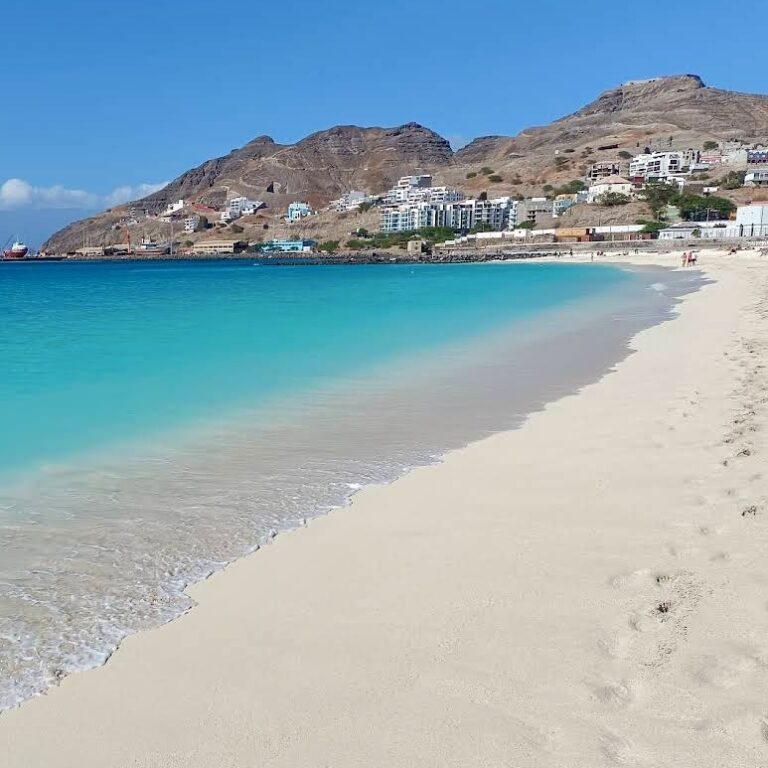
Today, the island is known for its music scene, creative life and urban atmosphere. Nearly 80,000 people live on São Vicente, around 70,000 of them in the main town, Mindelo. Although the island is dry, it offers good beaches and open coastal areas where the sea plays a central role in both leisure and working life.
Mindelo — the cultural capital
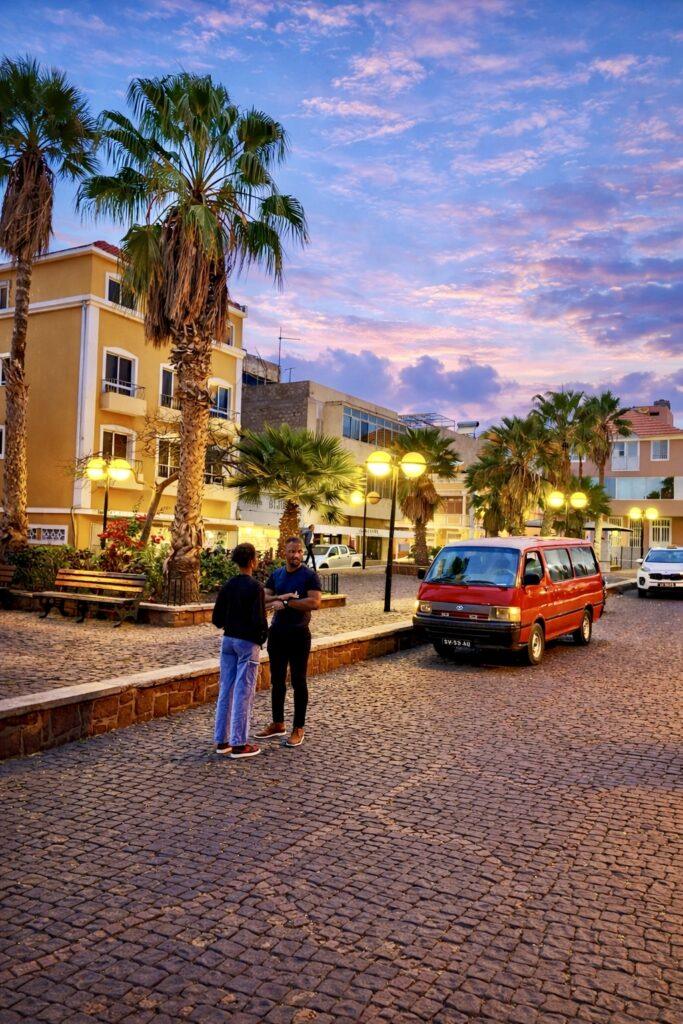
Cape Verde’s second-largest city is built around a large harbour and serves as both a cultural and commercial centre. Known for its music scene, cafés, colonial architecture and a lively yet manageable atmosphere. Here, urban life and local traditions meet at a pace that is more energetic than on many of the other islands — without ever feeling hectic.
Getting from Santo Antão to São Vicente
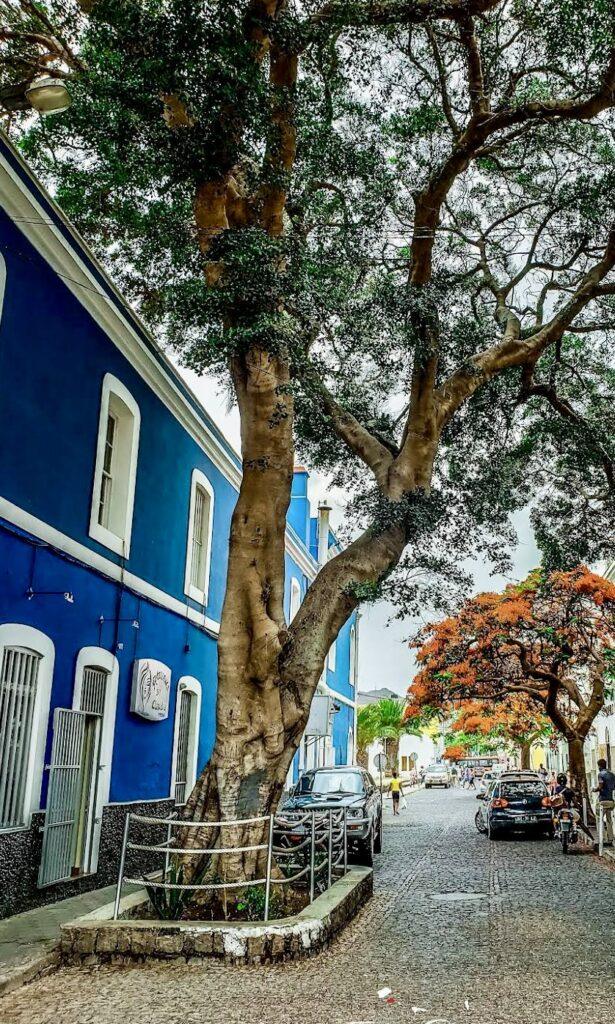
There are two ferry companies operating between Porto Novo and Mindelo:
The crossing takes about one hour. Tickets can usually be bought online but are also available at the harbour offices in both towns. Credit cards are accepted.
Music plays a central role in everyday life, not only as entertainment but as part of local identity. The streets of Mindelo are often filled with sound from radios, bars and small live venues, where morna, coladeira and more recent genres exist side by side.
Accommodation in Mindelo
Residencial Laginha
A simple but decent place with breakfast included. Located right by the beach and about a 15-minute walk from the ferry terminal. Search on Booking.com.
Georgette Apartments
Comfortable apartments with good facilities and a balcony. Located right by the beach and about a 15-minute walk from the ferry terminal. (Owned by the same people who run Château Georgette on Santo Antão.)
Restaurants & bars in Mindelo
Nanda’s Place
A small terrace with a view and very good food.
Kalimba Beach Club
By Oásis Atlântico. Slightly touristy, but a relaxed and enjoyable place to spend time. The food is decent.
Bar Estrela
Ave Fernando Ferraira Fortes. A very simple restaurant, centred around the owner, Lidya. It feels as if you are sitting in her living room for a meal. The choice is usually between chicken and fish — everything is well prepared.
Restaurante Taverna
A decent Italian restaurant.
Padaria Alecrim
Well worth seeking out.
Kafe Djan Djan
A good breakfast and decent coffee.
Simpatico Sports Bar
An Irish pub atmosphere.
Music, the nation’s heroine & carnival
Music plays a central role in Cape Verdean culture and everyday life. The islands’ history of migration, seafaring and contact between continents has shaped a distinctive musical identity with several characteristic genres. The most well-known is morna — a slow, melancholic style that reflects themes of longing, love and distance. Its calm, reflective mood has made it Cape Verde’s national music.
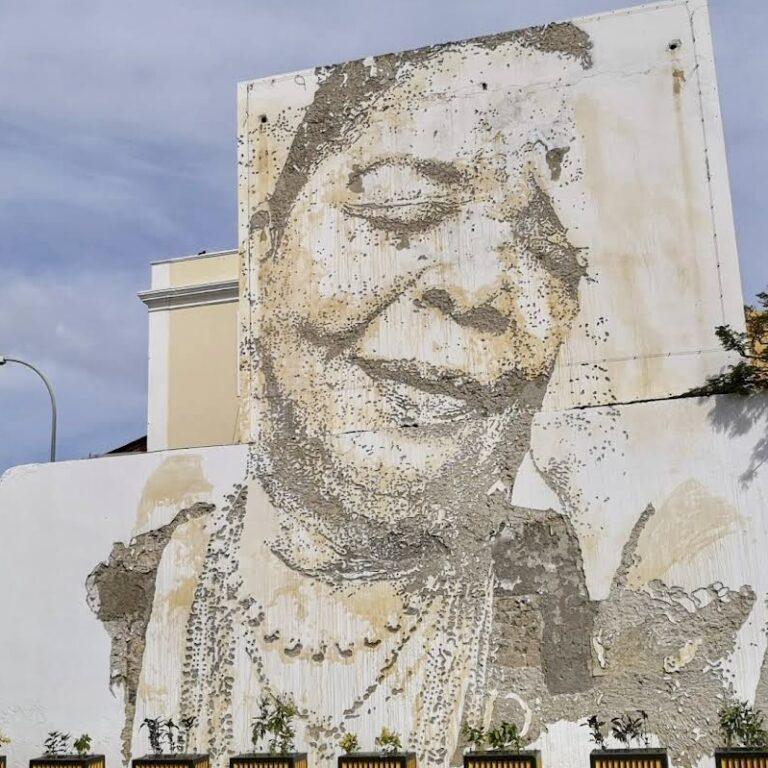
Cesária Évora (1941–2011)
Born in Mindelo on São Vicente, Cesária Évora became world-famous for her interpretations of morna. Her voice was deep, restrained and full of emotion, making her a symbol of Cape Verdean sodade — a sense of longing and homesickness. She often performed barefoot, as a sign of her connection to ordinary people and a simple way of life.
Cesária Évora remains a national heroine. When she died, the country mourned, and her face can still be seen on house walls and murals across the islands.
Other important national music genres include:
- Coladeira — a more rhythmic and livelier relative of morna, with faster tempo and often humorous or socially oriented lyrics. Commonly played at celebrations and social gatherings.
- Funaná — originating from Santiago, this energetic style features accordion and strong rhythms. Has roots in rural working culture, now part of both traditional and modern dance music.
- Batuque — one of the oldest musical forms, based on singing, clapping and drumming. Strong African roots; used at ceremonies and community events.
Carnival
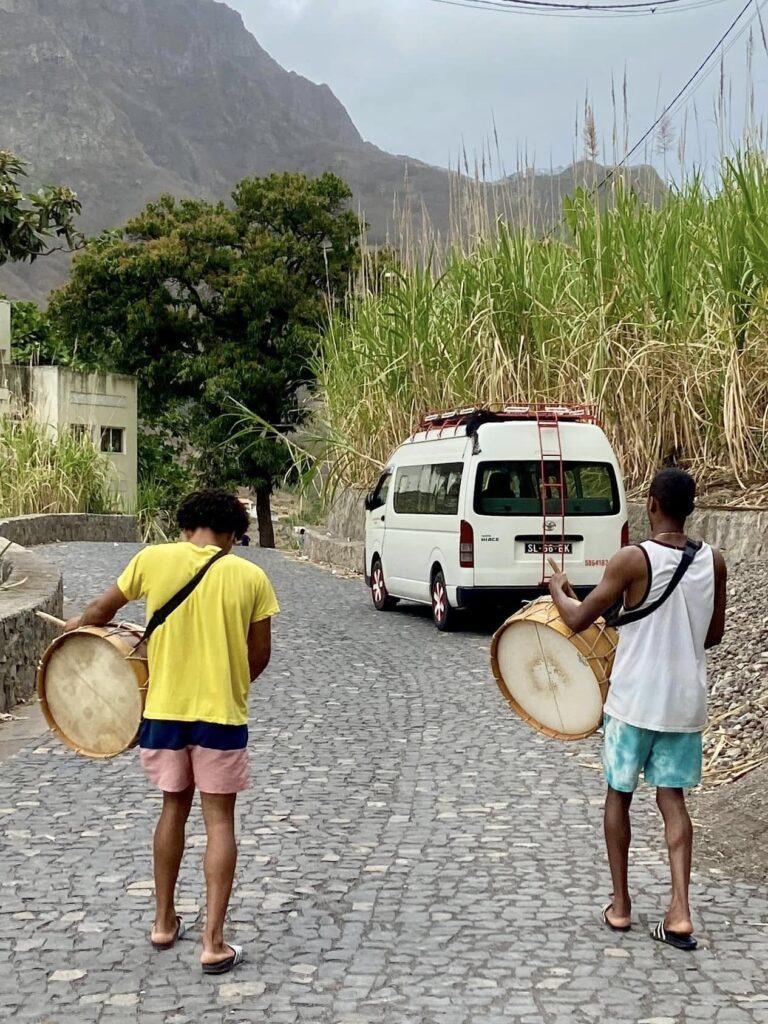
Every February, carnival is celebrated across the country. In the months leading up to it, drum rhythms can be heard daily in towns, villages and mountain areas, as both children and adults rehearse for local parades and for the major celebrations in Mindelo.
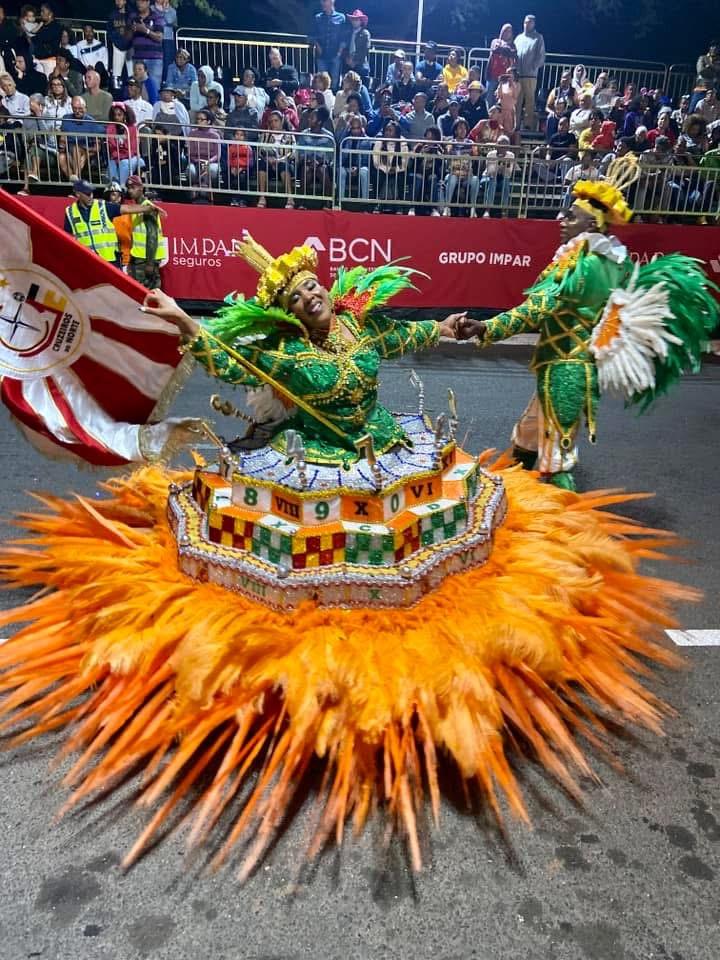
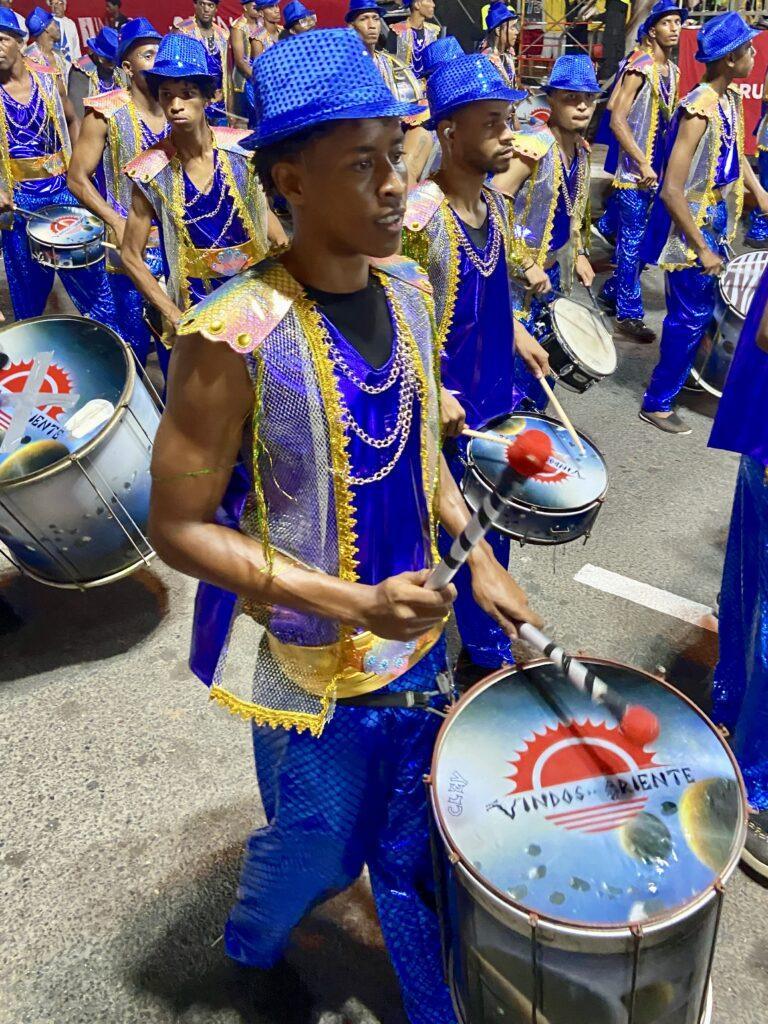
The Mindelo Carnival is the largest and most famous in Cape Verde. Thousands of participants and even more spectators fill the streets for several days of parades. Roads are closed, live television broadcasts take place, photographers are everywhere, and people often wait for hours to secure a good viewing spot. It is an experience not to be missed.
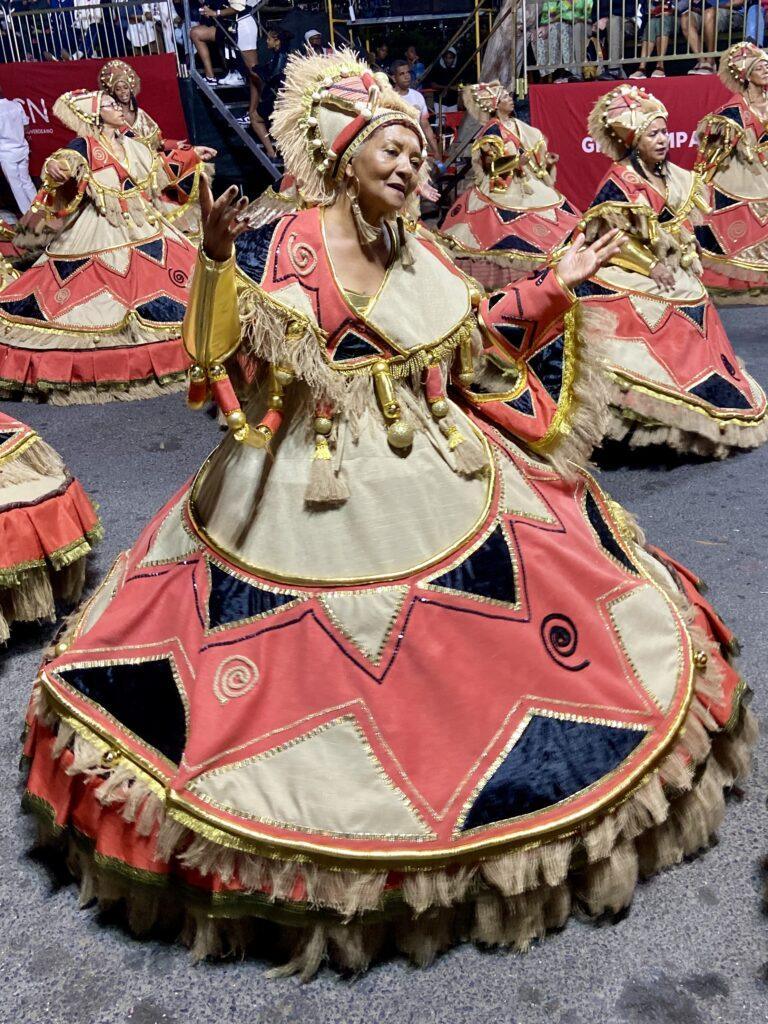
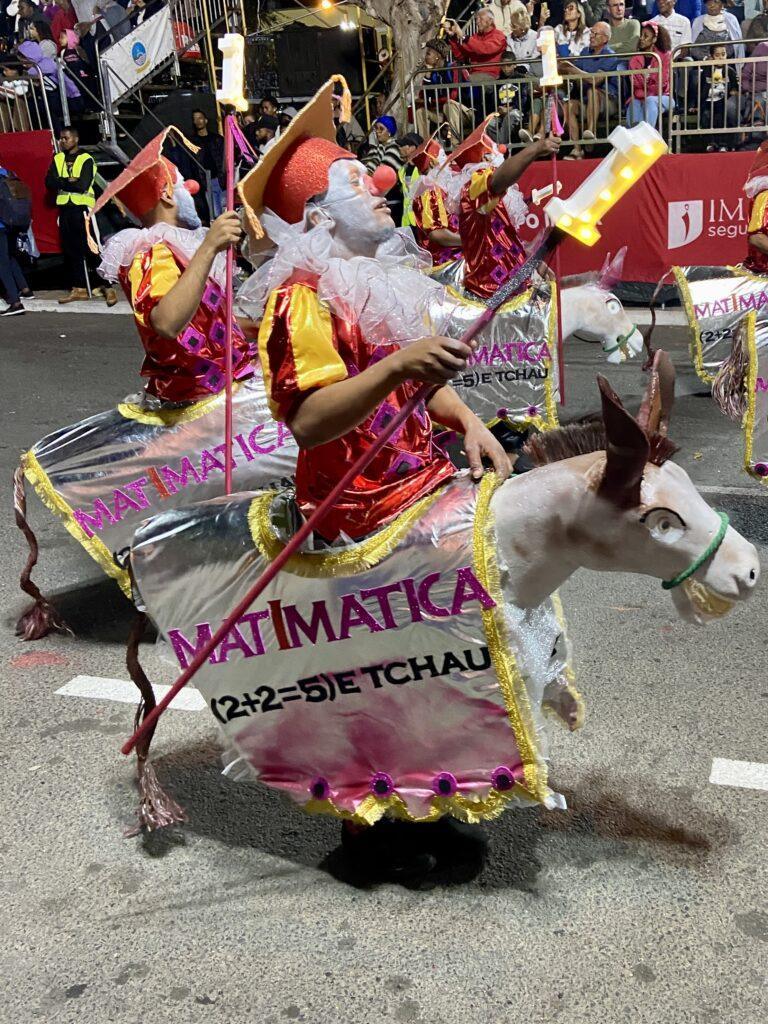
Inspired by the Brazilian carnival but with a distinct Cape Verdean character, the event features colourful parades, dancers, music groups and large floats prepared by local associations over many months. The music ranges from samba-influenced rhythms to coladeira, funaná and traditional drumming. The atmosphere is lively, inclusive and strongly community focused.
For the people of Mindelo, carnival is more than entertainment. It is a cultural event where creativity, friendly competition and local pride come together. Each group presents its own theme, costumes and music, with great attention to craftsmanship and detail. Carnival brings the entire city together — participants and spectators alike — and clearly reflects Mindelo’s role as Cape Verde’s cultural centre.
5Sal
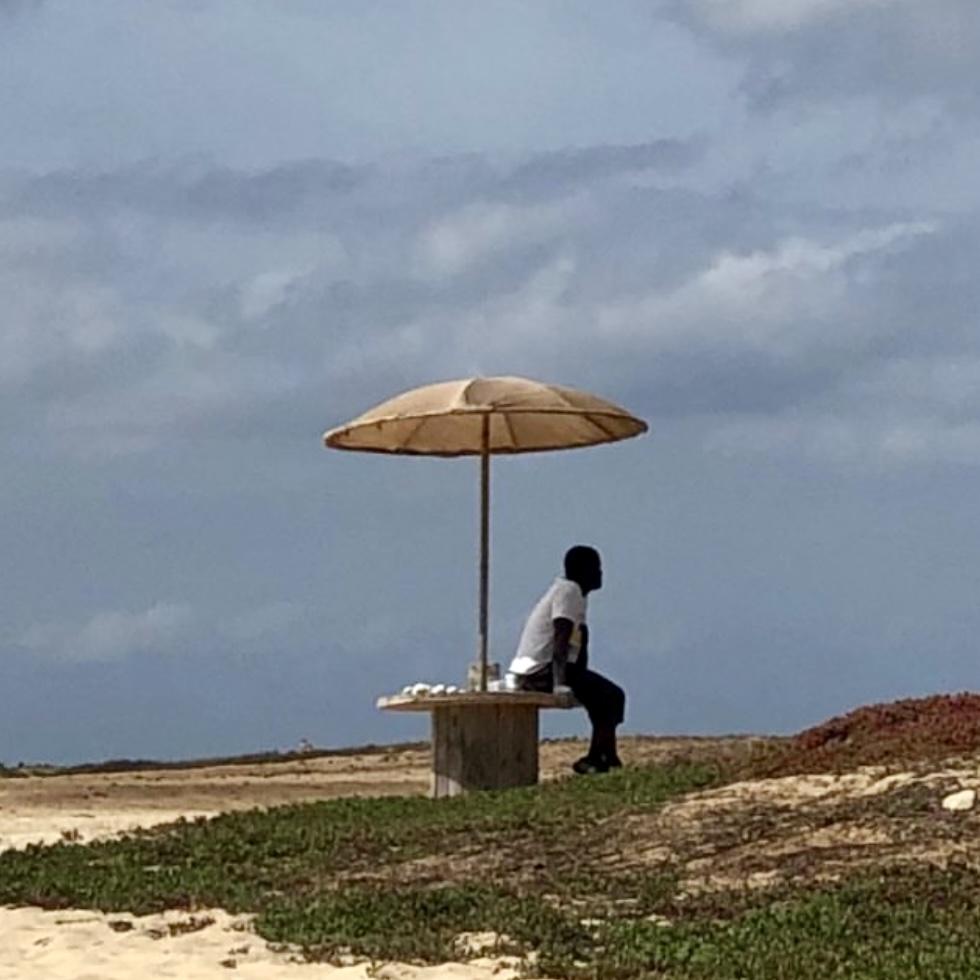
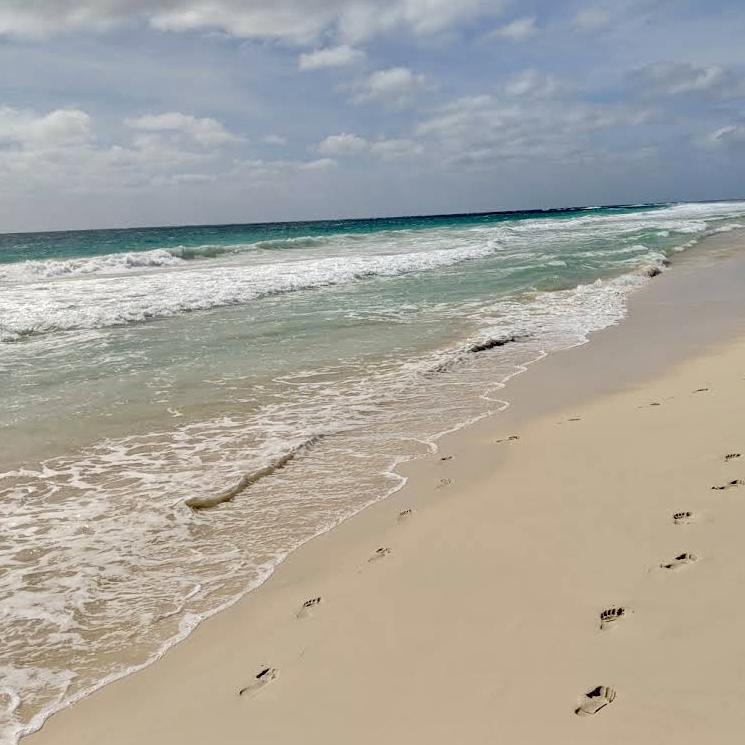
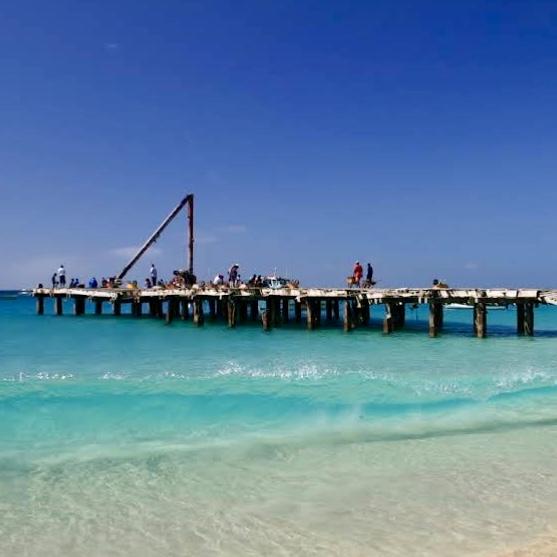
One of the flattest and driest islands — and without doubt the most tourist-oriented. To be honest, there is little of Cape Verde’s traditional character left here. The island is largely shaped by mass tourism, with large all-inclusive hotels and resorts along the coast, and a town filled with souvenir shops and tourist-oriented businesses.
Sal is best visited for its beaches alone, as well as for the good conditions for kitesurfing, windsurfing and diving. With a short walk, it is often possible to find quieter stretches of sand away from sun loungers and package-tour crowds.
There are flights from Mindelo to Sal, as well as direct charter flights from several European countries.
6Hiking Routes
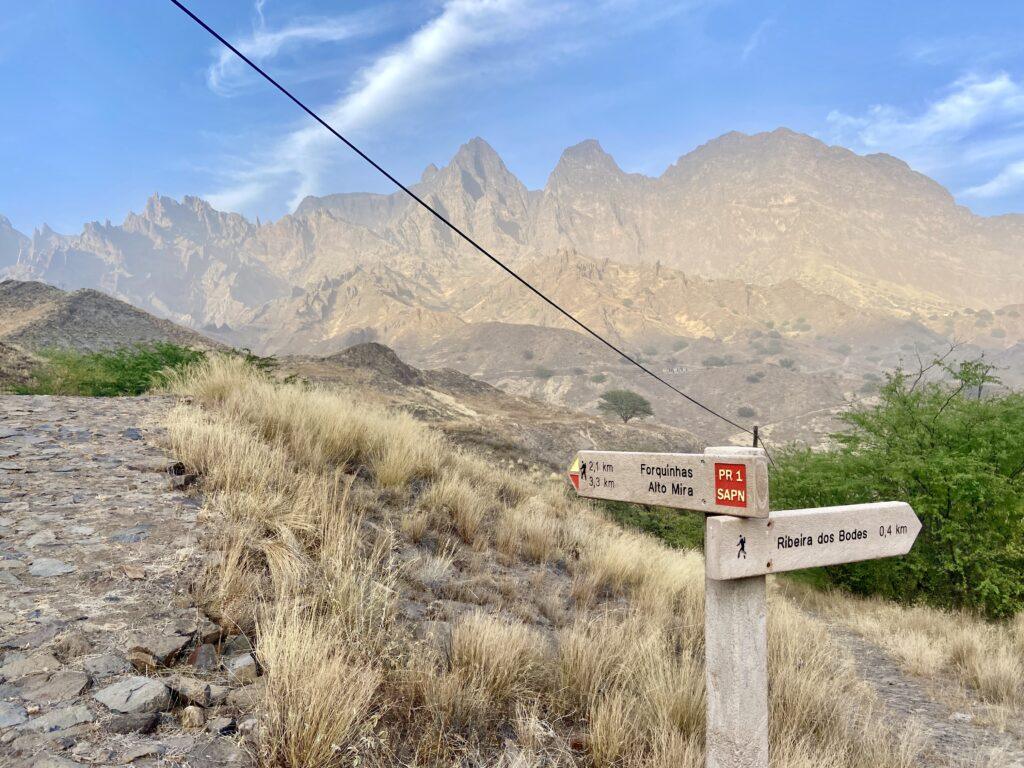
We found most of our routes on AllTrails Premium, which we also used to stay updated while hiking. The trails are generally well marked and vary in surface: worn paths, preserved cobblestones, steps, gravel and rocky sections. There are steep climbs in places, so many routes are not suitable for weak knees or nervous hikers. This is not mountaineering, but medium to challenging hiking.
Selected routes
The following routes are just a selection — there are many possible variations and combinations:
Pombas → Cova Crater (or reverse)
A long climb with many steps, but well worth it. The route leads to a volcanic crater with stunning views over the Paul Valley. You can continue beyond the crater or walk back down. It is also possible to be driven to the top and hike down.
Ponta do Sol → Fontainhas → Cruzinha
A scenic coastal walk past one of the most remote and striking villages in the world. Transport can be arranged from or to Cruzinha — ask in Ponta do Sol.
Ribeira de Torre Valley from Xôxô
A very beautiful valley on the opposite side of the Paul Valley.
Ribeira Grande → Topo da Montanha do Delgadinho
(Also possible to reach by car.) One of the island’s most impressive viewpoints, located on a bridge with deep valleys on both sides.
A suggested one-week hiking itinerary
Some stages can be split or walked separately. We completed it in four days, which felt too rushed. This route combination remains one of our greatest travel experiences to date.
Cova Crater → Porto Novo
Get driven to the crater and start early. Overnight: Residencial Pôr do Sol, Porto Novo.
Porto Novo → Chã da Morto / Curral das Vacas
Swimming possible along the way if the waves are not too strong. Overnight: Casa do Nelson & Suzette (+238 991 79 44) — dinner and breakfast available.
Chã da Morto / Curral das Vacas → Chã de Feijoal
Overnight: Hospeda Dagem Lilua (+238 980 81 47).
Chã de Feijoal → Topo da Coroa & return
The island’s highest point (1,978 m). Reaching the summit is a surreal experience. (Can be combined with Day 3.)
Chã de Feijoal → Monte Trigo
Overnight in Monte Trigo.
Monte Trigo → Tarafal
By fishing boat — ask the locals. (Hiking is also possible.)
Tarafal → Paul (or your next destination)
By aluguer via Porto Novo.