On our journey through the Caucasus, our final stop was this country, which we knew little about—apart from its colorful TV commercials and its role as the host of COP29, UEFA Euro 2021, and the Eurovision Song Contest in 2011.
The country remains relatively unknown in the West, and during our eight-day stay, we did not encounter a single Westerner.
We carried plenty of preconceptions with us—some turned out to be true, while others were completely off the mark.
We flew in from Tbilisi, Georgia, and let’s make one thing clear right away: these are two very different countries.
We arrived straight from daily protests in a capital full of life in every sense, where politically engaged citizens fought to preserve democracy. A city with a passionate yet generally modest population, filled with noise, chaos, and an overwhelming amount of traffic—24/7.

At Baku Airport, we noticed the difference immediately—extremely clean, well-maintained, and no chaos.
The drive into the city center was busy with traffic, but the driving style was less aggressive than in Georgia. Along the way, we saw massive buildings on both sides and virtually no litter along the roads.
And then, there were Azerbaijani flags everywhere. And we mean everywhere—on digital displays, balconies, flagpoles, and advertisements. There was no chance of forgetting which country we were in.
On our first walk after checking in, the differences from Georgia became even more apparent.

How We Traveled:
In 2024, the only way for two Western travelers to enter Azerbaijan was by plane.
The border with Armenia—due to the ongoing conflict—was completely sealed, and the border with Georgia could no longer be crossed by train or bus, as it had been in the past.
For that reason, we flew directly from Tbilisi.
You need to apply for a visa, which can be easily done here:
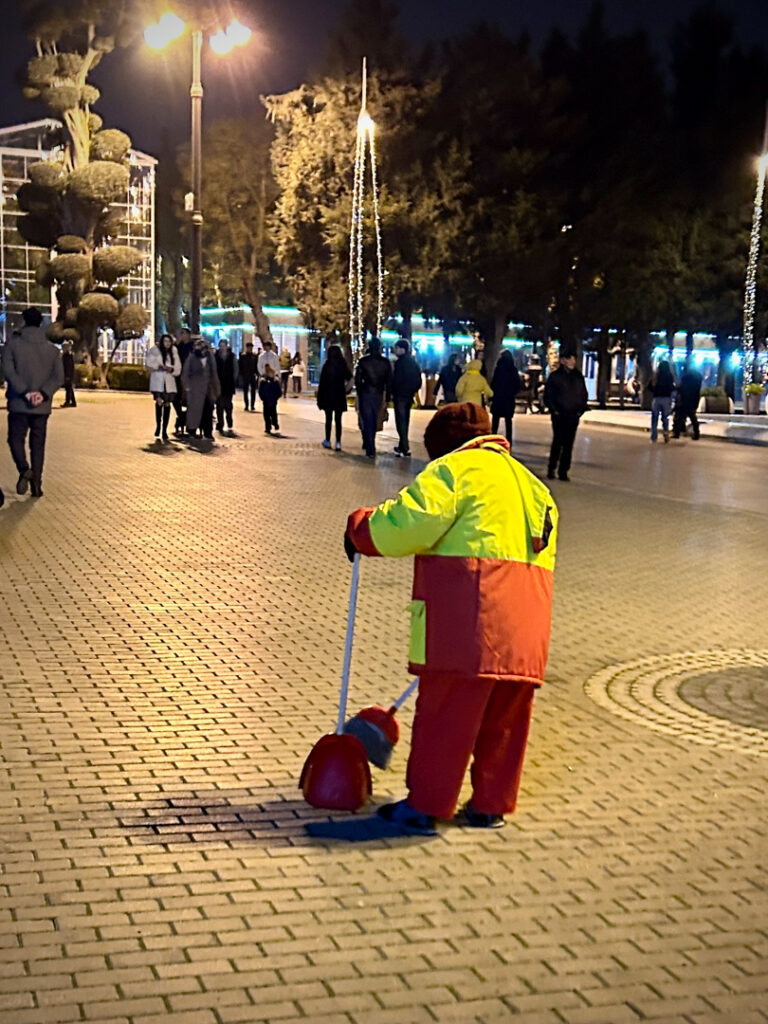
Skyscrapers in vibrant colors and unique shapes, a several-kilometer-long, well-maintained promenade along the Caspian Sea, where not a single piece of litter was left for more than a few minutes before a street sweeper with a broom and dustpan took care of it.
Well-dressed and well-groomed people of all ages strolled back and forth, almost as if they were paid to do so—with a calmness and orderliness we hadn’t seen before.
Let’s just say it outright: central Baku is polished, well-maintained, and wealthy, but as soon as you venture just a little outside, things change dramatically.
The city is surrounded by oil fields, which over the years have made the country rich, but the wealth hasn’t reached everyone. Stepping out of the center feels like leaving a theater set—suddenly, large luxury cars and modern public transport are replaced by old Ladas and dilapidated, ancient buses. Grand buildings and well-dressed citizens give way to worn-down houses and visible poverty.
Out here, huge billboards of the president’s portrait appear regularly—as if to remind people that he is watching—though it seems he is not prioritizing them.



We spent eight days in Azerbaijan, and that was about the time it took to truly understand and feel the country, given the many contrasts between rich and poor, urban and rural life.
The capital is filled with a Western-style café, nightlife, and restaurant scene and is packed with luxury stores and multi-starred hotels. The city center is almost devoid of Western tourists, yet it feels cozy, clean, and well-maintained. It’s a blend of ancient buildings, Soviet-era apartment blocks, and ultra-modern structures that resemble Dubai. These contrasts and layers of history give the city a unique soul, though in some areas, it does feel a little too polished.
The food scene is not particularly impressive—everything is fairly average, even in places that try to offer something more refined. [Link to: Where We Ate]
Outside the capital, in smaller towns and the countryside, things feel more authentic, and the atmosphere is reminiscent of Turkey. There are more visible traces of Islam and Islamic culture, more litter, worn-down roads, and aging houses—but also beautiful landscapes, incredible experiences, and, most importantly, extremely kind people and a more genuine food culture. [Link to: Outside Baku]
Overall, this is a country where people do not openly talk about politics, where there is a certain level of suppression, and where Islamic culture shapes daily life, albeit in a moderate way.
At the same time, it is a country with visible economic progress, general happiness, and immense wealth among many—especially in Baku. A place where people focus on everyday life, proper behavior, and most importantly, on welcoming outsiders—at least, our nationality was received with great hospitality.
How We Traveled:
Several reviews and websites (including Trustpilot) warn against using the ride-sharing app Bolt from the airport, citing drivers often demanding more money than stated upfront. We decided to take the risk anyway and experienced no trouble whatsoever. Our driver was friendly, and there was no hint of dishonesty.
However, be aware that Bolt often sets extremely low prices, and we’ve previously experienced drivers requesting a higher fare upfront. We didn’t see this as fraud, but rather as an honest attempt to earn a fair wage.
Overall, we had a positive experience—friendly driver and no issues at all.
No matter where we went—whether in the countryside or the city, whether speaking to the wealthy or the poor—we encountered an extraordinary level of kindness, helpfulness, and hospitality, far beyond what we had experienced in the previous countries.
On several occasions, we even sensed a genuine gratitude that we were there.
The few times we prejudiciously assumed that someone might try to take advantage of us, it turned out to be nothing but generosity and kindness—whether it was showing us the way, explaining how to buy a ticket, or simply wanting to chat, share some lavash (thin bread), or even pay for our bus fare.
Smiles were everywhere—even at Rus Market in northern Baku, where people make a living selling all sorts of second-hand goods, from used shoes and toilet bowls to vacuum cleaners, beds, and even live turkeys.
We usually dislike markets like this, as they often involve pushy sellers and shady characters, but not here. Just smiles, curiosity, and appreciation that we had even chosen to visit.

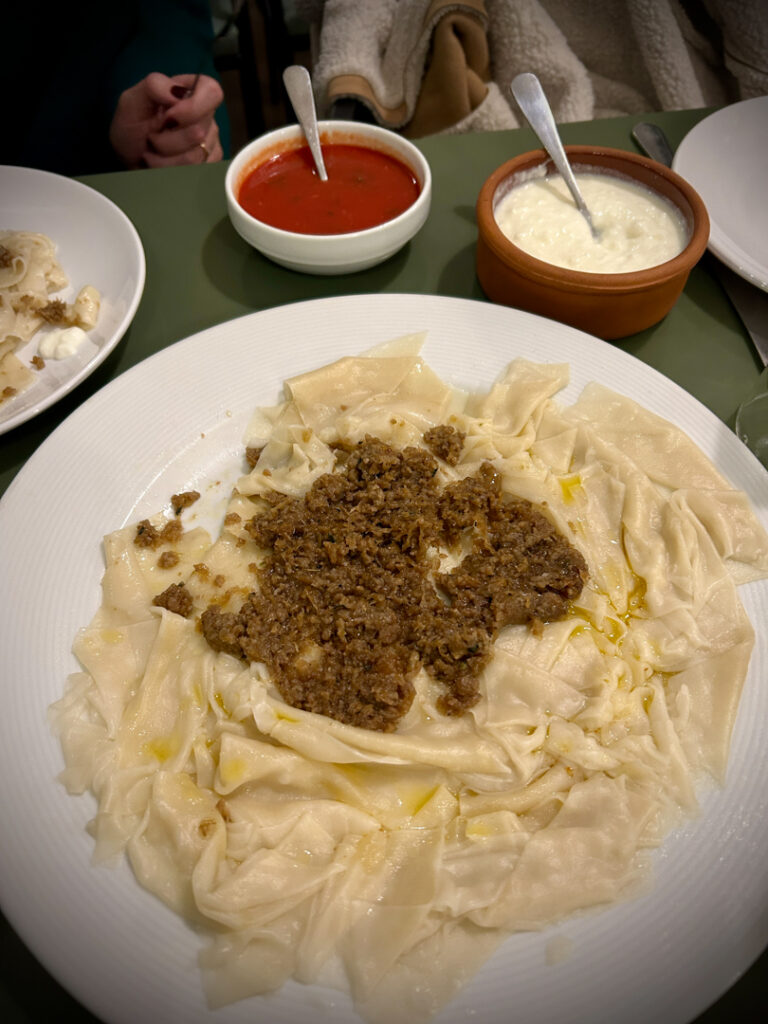
Azerbaijani cuisine shares similarities with Turkish and Caucasian cooking, prominently featuring dishes such as kebabs and shashlik made from beef, lamb, or chicken. Additionally, you’ll find Dolma (grape leaves stuffed with minced meat or vegetables and rice), Lavash (thin flatbread), and generous use of sumac spice.
Other popular dishes include Dushbara—tiny dumplings served in broth—or open dumplings, which often resemble slightly overcooked pasta topped with minced meat.
In the countryside, particularly in Sheki, they have their own signature dish called Piti, which was our culinary highlight.
Despite these highlights, we found Azerbaijani food somewhat lacking in excitement. Although markets offer high-quality fresh ingredients, it felt like restaurants didn’t always utilize these optimally. The abundance of fresh herbs and local produce didn’t seem to fully translate into flavorful dishes, leaving meals a bit bland.
Overall, it was a mixed gastronomic experience—interesting, but with untapped potential in terms of flavor.
[Read more about dining outside Baku here.]


Getting Around:
• Walking is definitely the best way to explore Baku—especially if you want to see the city and quickly find your bearings.
• Alternatively, if your legs start to complain, you can use ride-sharing services such as Bolt.
Be aware: the cheapest rides are often set too low by the app and aren’t profitable for drivers. Either select one of the slightly more expensive options upfront, or be prepared to accept a higher price if a driver asks for more. We didn’t consider it fraud, just drivers trying to earn a decent living.
• Public transportation: We didn’t extensively use it, but both the bus and metro systems are efficient, extremely clean, and very cheap. A single transport card works for all options—you just load credit and scan it once per passenger when entering buses or the metro. Public transport in Baku is so affordable that it could teach us a lesson or two back home in Denmark!
Where We Stayed:
We rented an Airbnb in the Sabail district near the Caspian Sea. Although safe and quiet, the area wasn’t particularly exciting, especially after dark.
For travelers looking for more action and nightlife, we recommend staying in the more central Nasimi district.
Where We Stayed:
We rented an Airbnb in the Sabail district near the Caspian Sea. Although safe and quiet, the area wasn’t particularly exciting, especially after dark.
For travelers looking for more action and nightlife, we recommend staying in the more central Nasimi district.
Baku (Baki) has around two million inhabitants—approximately one-fifth of the country’s total population.
It’s unlike other capitals we’ve visited, and distinctly different from the rest of Azerbaijan. The city center is incredibly clean, polished, and well-maintained, with grand architecture, a beautifully maintained promenade along the Caspian Sea, and an abundance of modern cafés, restaurants, and bars, complemented by luxurious hotels.
Although more than 90% of Azerbaijanis are Muslim, the country is officially secular. The influence of Islam is subtle—you’ll occasionally see women wearing headscarves, even niqabs, and prayer rooms are available in some places, but the overall feeling remains moderate and secular. Alcohol is widely served, nightlife is lively, and the call to prayer from minarets is relatively discreet.
Thanks to multiple oil booms, a significant portion of Baku’s population clearly enjoys considerable wealth. Most people—both men and women—are visibly affluent, well-dressed, and well-groomed, driving expensive cars and frequenting modern cafés, restaurants, bars, and luxurious hotels along the beautifully maintained promenade by the Caspian Sea.
Wherever we went, we encountered nothing but helpfulness, genuine curiosity, and smiling faces—a stark contrast to many other countries and cities we visited before Azerbaijan.
There is police and security everywhere (along with just as many street cleaners), and the city feels extremely safe. Although traffic can be heavy, most key sights are within walking distance in the city center.

To keep things fair, we only name the places we had positive experiences at and avoid calling out any bad ones. Here are some of the spots we personally visited and enjoyed:
Baku clearly wants to be seen as a gastronomic hotspot, and many (often sponsored) bloggers rave about fantastic fine dining experiences and impressive local cuisine. This wasn’t our experience.
We visited several decent restaurants, but nothing blew us away. The food was generally fine but not particularly memorable. Several bloggers (often sponsored) praise the local culinary scene as exceptional—something we didn’t quite agree with.
We found the food to be mostly average, lacking real standout flavor experiences. Perhaps we were a bit spoiled after visiting Georgia, where especially the white wines had impressed us repeatedly. In Baku, despite good intentions and friendly service almost everywhere—except for one notably rude restaurateur—the culinary experience was more modest.
Nature, Hiking and Historical Sites in Azerbaijan
Azerbaijan is full of stunning nature and historic sites to explore, with countless opportunities for hiking. Unfortunately, we were slightly limited by both time and season. If you’re planning a longer trip for hiking and exploration, we highly recommend visiting in spring or autumn.
That said, there are also winter experiences available, such as snow hikes and skiing.
As a minimum, we recommend visiting the following:
Gobustan National Park – Day Trip from Baku
Despite its popularity, Gobustan is definitely worth the visit. It’s a trip most tourists take, so expect some crowds, but if you want to avoid group tours and pre-planned lectures like we did, skip the guided tours. We chose to get there ourselves—it’s not necessarily easier, but definitely more fun, educational, and culturally authentic.
We recommend visiting these three places, in this order:
1. Gobustan Museum
Start here before heading out to the rock carvings. Though it’s quite text-heavy, the museum provides valuable context about the country’s history and gives a better understanding of the petroglyphs.
2. Gobustan Rock Art Cultural Landscape – Petroglyphs
A walk through the landscape to see a small selection of the thousands of prehistoric rock carvings in the area.
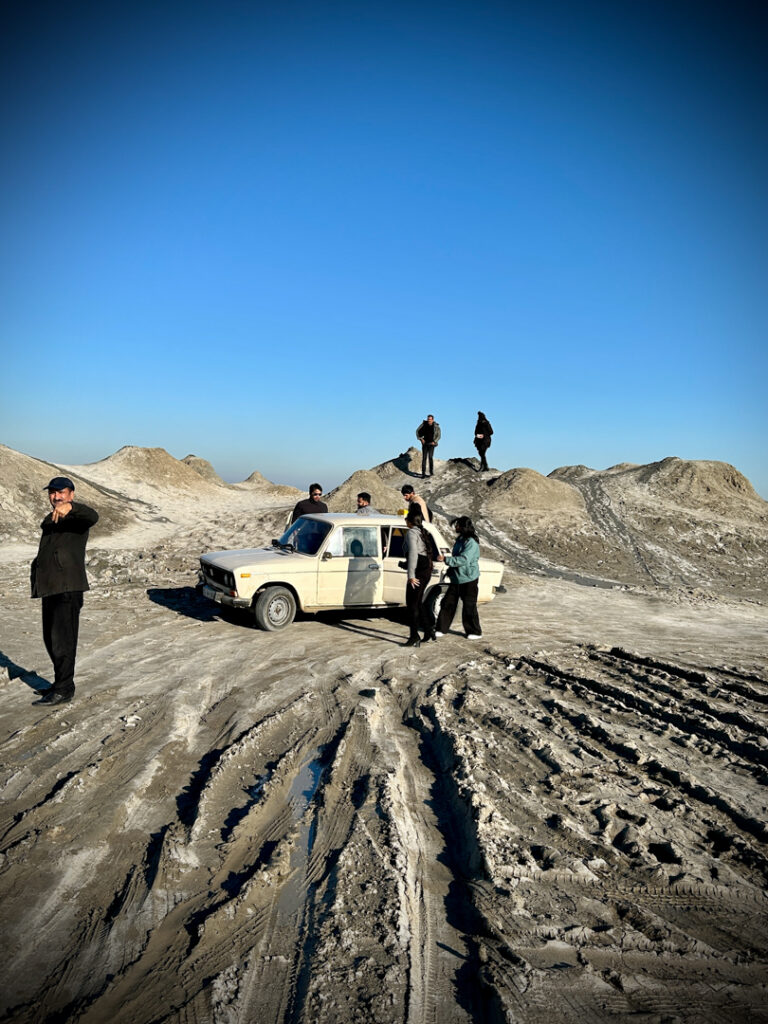
3. Mud Volcanoes
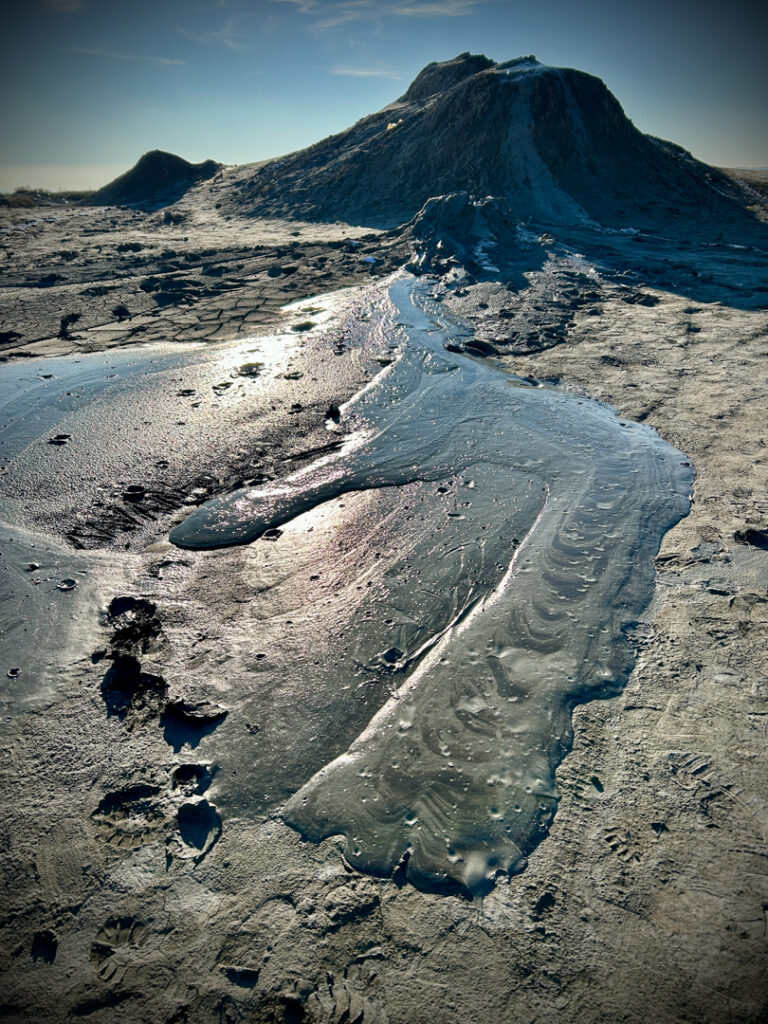
See the rare mud volcanoes with small eruptions of gas and mud, forming fascinating landscapes. It’s a bumpy ride and wild nature—if you can overlook the litter, that is. (PHOTOS 35, 36)
Note: Don’t attempt to drive up there yourself – the road is terrible, and you could face expensive damage fees from the rental company.


We took bus #125 south from Baku (e.g., from Azneft Square) to Karvansaray Shopping Center (~30 minutes). Cross the street and look for a small white bus, line 195 to Gobustan town center – you pay cash when getting off (around 1 manat per person in 2024).
From there, we took a taxi to the museum, rock carvings, and mud volcanoes and back again. We paid 50 manat (2024), which may have been a bit steep, but our two elderly drivers were incredibly sweet and argued the whole way about bumps and routes like an old married couple—totally worth it.
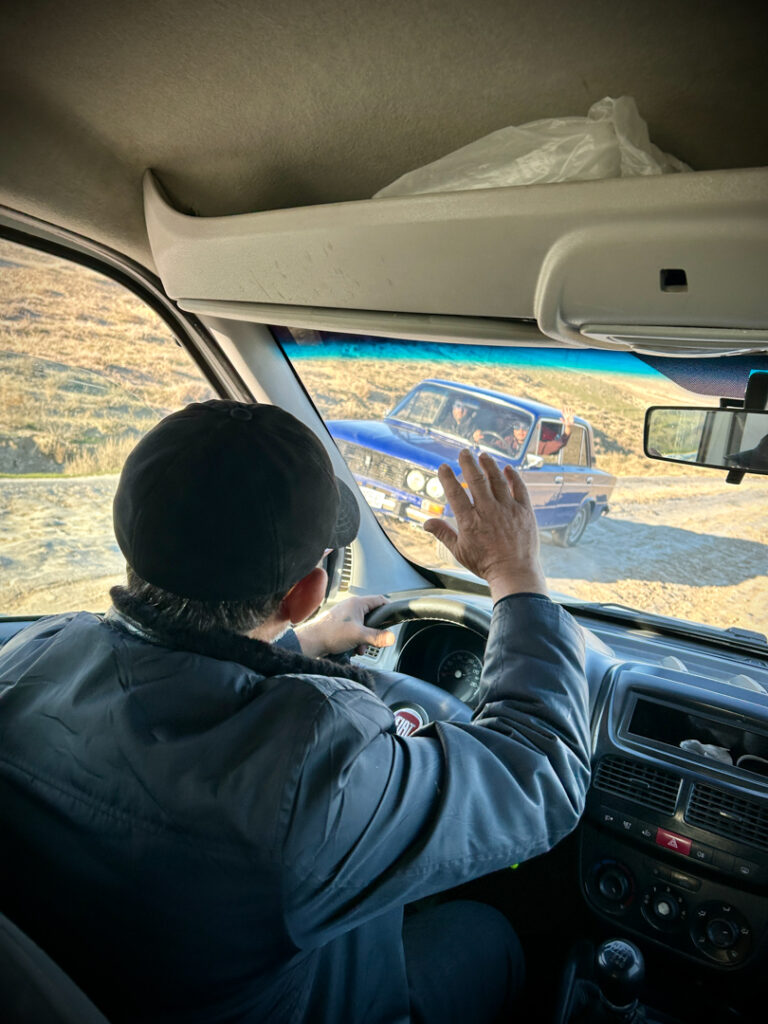
Also part of the experience: a swarm of Ladas headed the same way or coming back with tourists on board—such a fun sight!
Tickets for the museum and petroglyphs are bought at the museum.
A small mountain town located a couple of hundred kilometers west of Baku. It’s set in a stunning natural landscape and serves as a great base for hiking and other day trips to nearby waterfalls, ski resorts, and a cable car that takes you from the town up into the mountains for breathtaking views.
The town itself doesn’t offer a whole lot in terms of attractions, but it’s a pleasant place for a long walk and to soak in the mountain air.
We only spent half a day here before heading on to Sheki, but there are plenty of accommodation options if you want to stay longer.
We took the train from Baku – the journey takes around 3 hours (possibly a bit more). There’s only one departure per day from Baku Central Railway Station. The train is modern and comfortable, but make sure to either buy your tickets in advance or arrive early to get them on-site.
From the station outside Gabala, there are taxis available to take you into town.
Sheki (Seki/Shaki)
Sheki is an absolute must-visit – a beautiful town with a fascinating history.
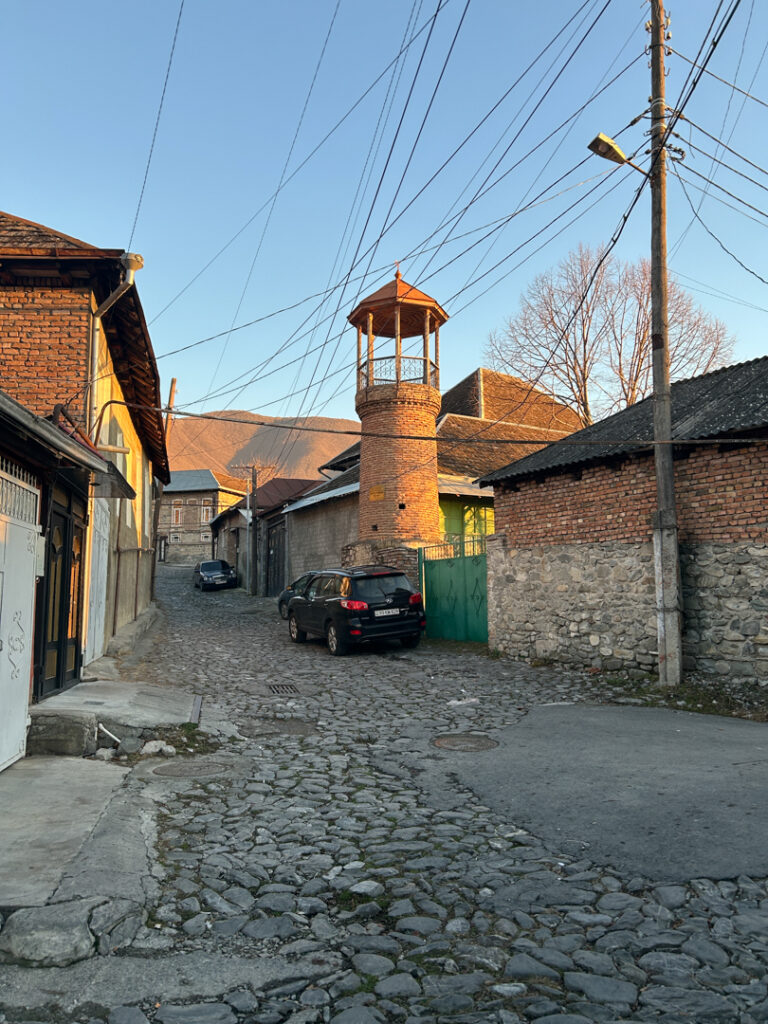
Spend a few hours walking uphill toward the mountains, where you’ll find a maze of narrow streets and pathways, charming houses (some well-preserved, others crumbling), ornate gates, and everyday local life. This was, in our opinion, the most picturesque and authentic part of the trip.
Like Gabala, Sheki is also a great base if you’re planning to hike or explore the surrounding nature.
We visited the Sheki Khans’ Palace – there’s a small entry fee, and the visit doesn’t take long, but the place is absolutely stunning.
The Sheki Khans were the rulers of the Sheki Khanate – an independent principality that existed during the 18th and 19th centuries.

Where wined and dined
We almost made the mistake of following other travel bloggers’ restaurant recommendations – luckily, the place they had suggested was fully booked, packed with tourists, and had live music blaring.
Starving and worn out after walking several kilometers between restaurants, we “settled” for Sultans House, which we had initially dismissed as too touristy based on how it looked from the outside.
Well… shame on our prejudices!
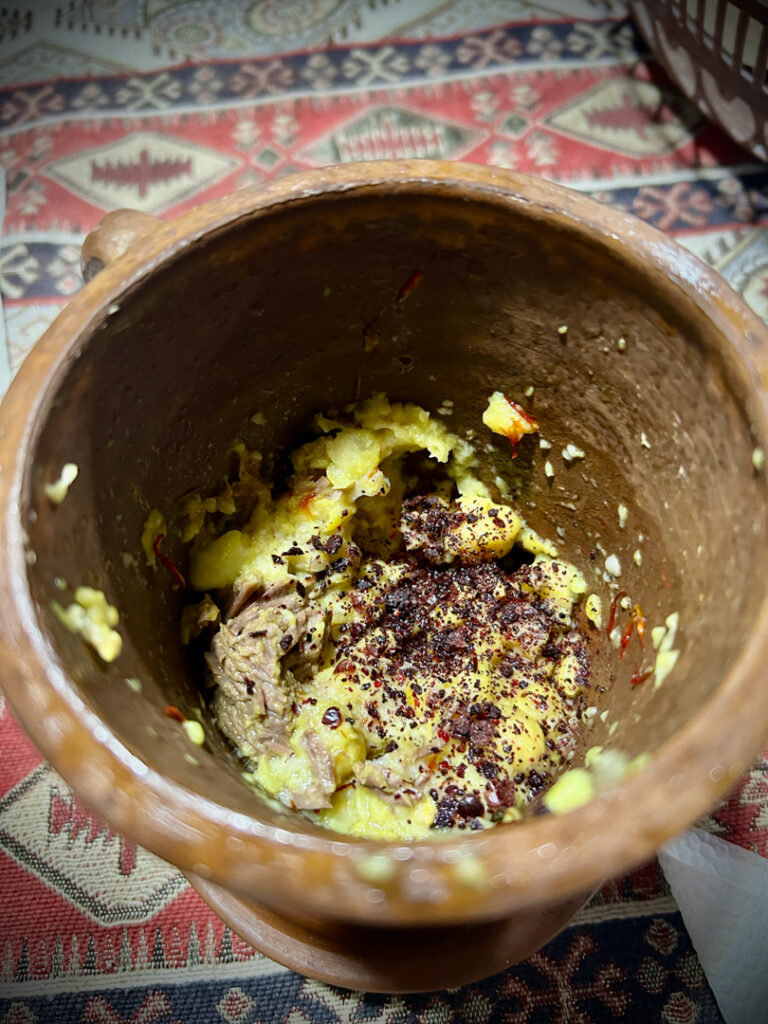
It turned out to be a small, cozy, family-run restaurant with the most wonderful and kind older gentleman serving us – possibly the best person we could’ve asked for to introduce us to the local specialty: Piti.
Piti is a rich soup made with lamb, chickpeas, chestnuts, potatoes, and saffron. It’s slow-cooked in a special clay pot – one per person – and served in two stages:
First, you crumble some bread into your bowl and pour the broth over it as a starter. Then, the remaining ingredients are mashed together and eaten as a main course. Very flavorful and fun to try!
For dessert, we had rose tea and a spread of local sweets including:
• Rahat Lokum (similar to Turkish delight, but even better)
• Peshmak (a bit like cotton candy)
• Baklava (Middle Eastern-style)
• Noghul (caramelized hazelnuts)
A truly memorable experience – and a reminder that sometimes it pays off to ignore first impressions and just go with your gut (especially when it’s hungry!).


Where We Had a Glass of Wine
• Khan Wine House, Akhundzade Ave.
Great service – the host served us the best Azerbaijani white wine we had on the entire trip: a barrel-aged Chardonnay.
By European standards, it would probably be considered a slightly above-average mid-range wine – but in the moment, with the setting and the warmth of the place, it tasted fantastic.
Where We Stayed
• Old Town Sheki Hotel – nicely decorated and overall a good hotel at reasonable prices.
However, the breakfast wasn’t really worth paying extra for.
How We Got There
We took a Bolt (ride-share) from Gabala to Sheki – it took just under an hour.
In hindsight, we probably should’ve taken a marshrutka (a small, often uncomfortable but cheap minibus) – it would have been cheaper and not much slower.
Returning to Baku, we took a marshrutka from Sheki’s main bus station. The journey took around 4 hours.

This section covers things, experiences, lessons, and moments that were either useful, funny, awkward – or just a bit random.
It also includes thoughts, impressions, or casual observations that may not necessarily be fact-checked, but felt true to us in the moment.
• Always carry toilet paper in your bag – especially if you’re not a fan of the wall-mounted bidet hose found in most toilets – or worse, if it’s missing altogether. Paper is rarely provided. Hand sanitizer is also a good idea. That said, Azerbaijan isn’t the worst we’ve experienced in the region.
• There’s often a noticeable sewage smell in restaurants, hotels, and apartments – you get used to it.
• Azerbaijani men almost exclusively wear black.
• A large number of adult women in Baku have had lip fillers. You’ll understand why if you catch a glimpse of the TV ads or soap operas playing in restaurants – apparently, that’s the current beauty standard.
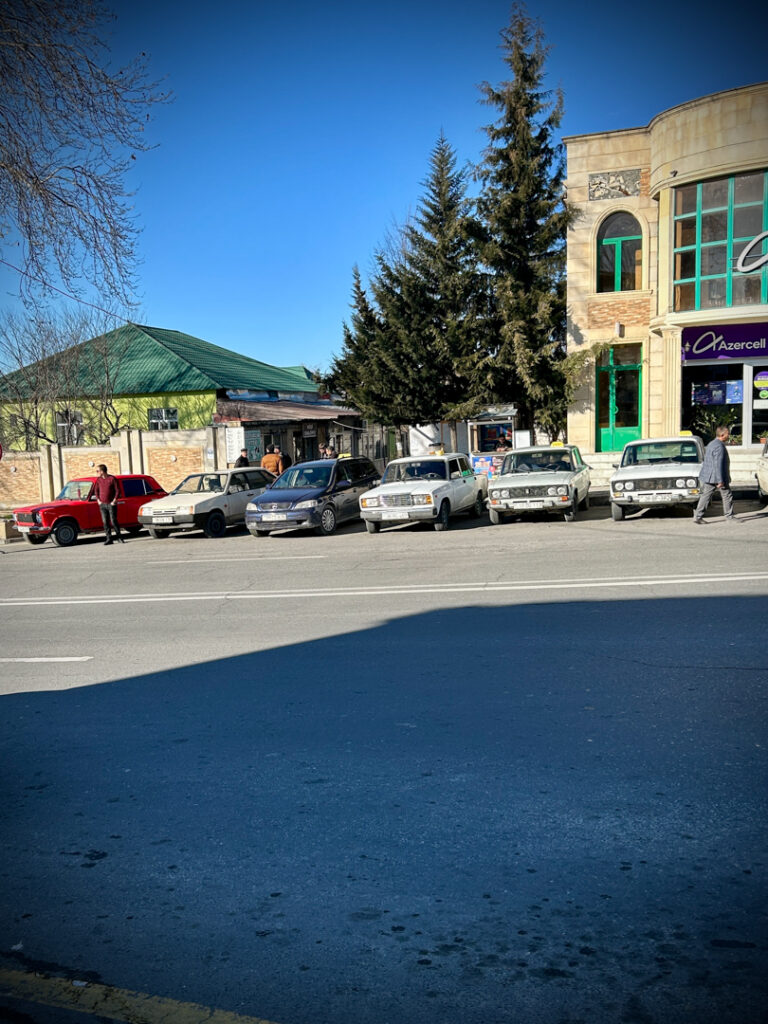
• Appreciate all the Ladas on the streets – especially outside of central Baku. The classic model is still popular and often used as taxis.
If you’re a young, cool guy in a rural area, it seems almost mandatory to drive a black Lada with loud music blasting through open windows.
• Most restaurants employ a cleaner who works continuously during opening hours.
• In central Baku, there seem to be hundreds of street sweepers, each with their own homemade broom and dustpan. They appear to be just waiting for a dropped popcorn kernel or a cigarette butt.
• Most restaurants have TVs, usually playing soap operas, sports, or commercials.
• Azerbaijan is currently, and has been for decades, in conflict with neighboring Armenia. So be careful not to ask for a local “Armenian” wine, like we accidentally did (even though we didn’t mean to). Fortunately, the waiter came back anyway.
• Do yourself a favor and try the local buses or marshrutkas – they’re a staple of transport across the Caucasus and in many other parts of the world (sometimes under different names).
These are often old and uncomfortable minibuses that run from A to B but will pick you up or drop you off almost anywhere along the route. It’s cheap – and a real cultural experience.
Just note: no room for luggage unless you can hold it on your lap.
• Islamic culture is more visible outside of Baku, where public spaces are often male-dominated, like gaming cafés or street corners. So be mindful of where you go.
However, there’s no expectation to wear a headscarf or cover up in public spaces (only in mosques).


It’s all about sharing our attempt to understand the world by experiencing it with our own eyes. Here and on multiple platforms, we talk about our experiences—the good and the bad—and we have an opinion on most things, which we are more than happy to share.

© All Rights Reserved.